
Transforming Work Surface
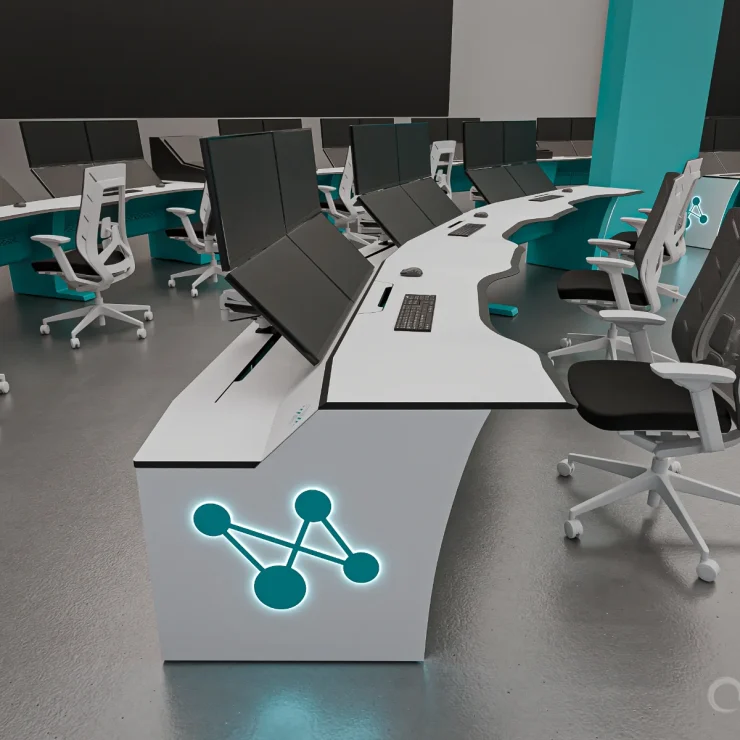
A focused ergonomic solution designed to improve the operator’s workspace.
A concept that emerged not from a planned brainstorming session, but from a simple observation — and a familiar mechanism seen from a new perspective.
Design - Denis Zarembo
Observation:
Some of the most interesting ideas do not appear in structured workshops. They emerge in between — when attention shifts, and something ordinary suddenly reveals a new potential.
This project started with a simple question: What if the work surface could change its depth?
Insight:
We explored multiple mechanical approaches, but none felt right. They were either too complex, too heavy or too expensive.
The answer came from an unexpected place — roll-top bread box, commonly used in roll-top furniture.
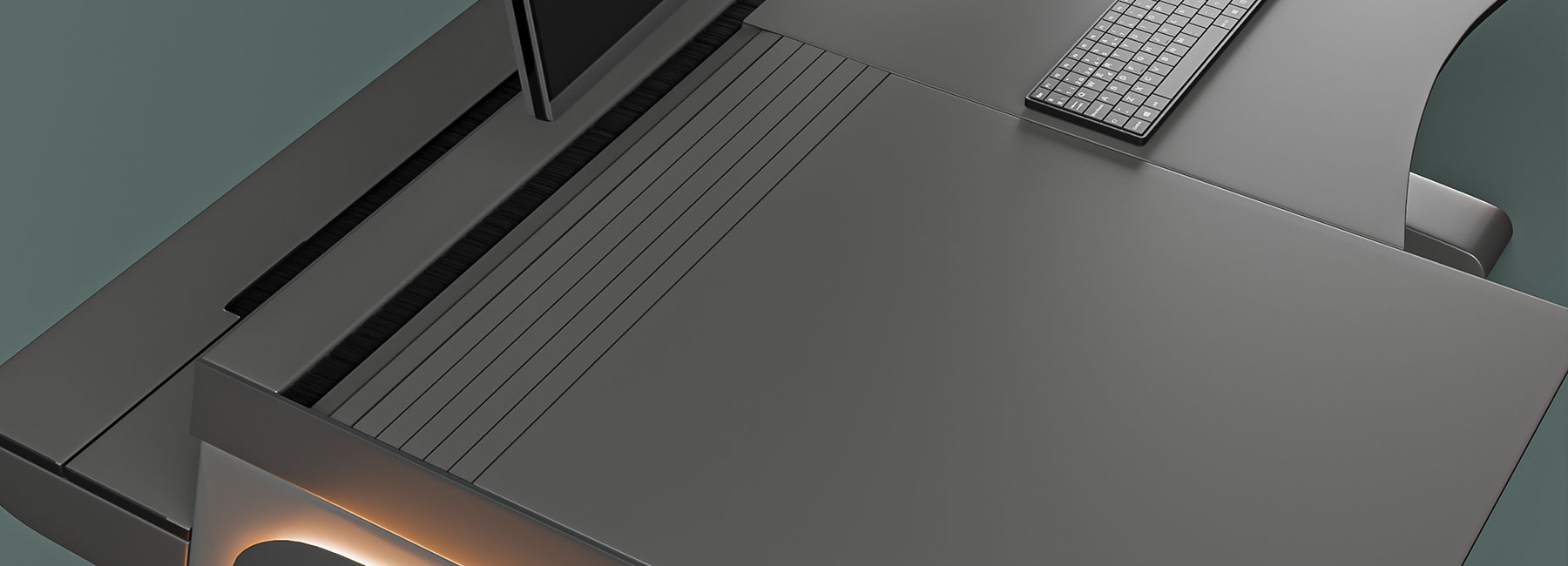
A sequence of narrow segments moving along a curved path, disappearing into the structure while maintaining a continuous surface.
A simple idea, but with the exact behavior we needed.


Solution:
We translated this principle into an engineering module.
The result is a three-zone work surface:
- The central section remains fixed.
- Two side sections extend forward, expanding the usable depth.
- Each side module is composed of narrow lamellas mounted on a flexible base.
- Inside the structure, a drum or gear-driven system guides the movement along rails, allowing the surface to unfold into a continuous plane.
- The extension range is 150–200 mm.
A small shift — but enough to significantly improve arm support and reduce fatigue.
Need more space — extend. Need compactness — retract.
Result:
What began as a reference to a familiar everyday mechanism evolved into a practical engineering solution.
Not a visual concept, but a real system that can be manufactured and applied in operator workstations.
A small change in mechanics — with a meaningful impact on ergonomics.
Exploring a product idea?
Let’s discuss how it can be applied to your product.