
Sheet Metal Furniture & Modular Interior System
Design — Denis Zarembo
Challenge:
Develop a unified interior system based on profiled sheet metal, including a dining set, modular wall panels and a range of functional accessories. The main challenge was the material itself. Steel works exceptionally well in industrial applications, but in residential interiors, it can easily feel heavy and overly technical. We needed to retain its structural advantages while creating visually lightweight products that could eventually grow into a complete furniture collection.
More importantly, we were designing around PROMBURG’s existing manufacturing capabilities rather than an abstract production scenario. Laser cutting, bending, roll forming, welding and powder coating were all part of the brief. From the very beginning, understanding how each product would actually be manufactured was just as important as defining its appearance.
Solution:
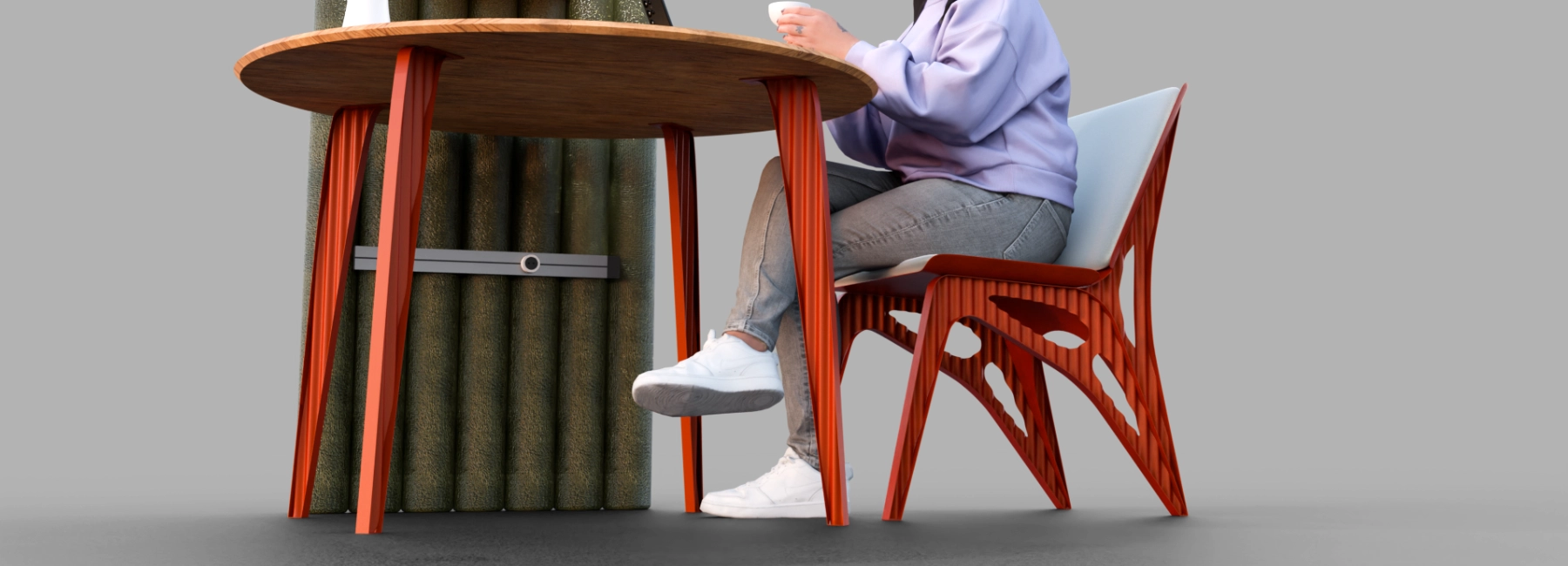
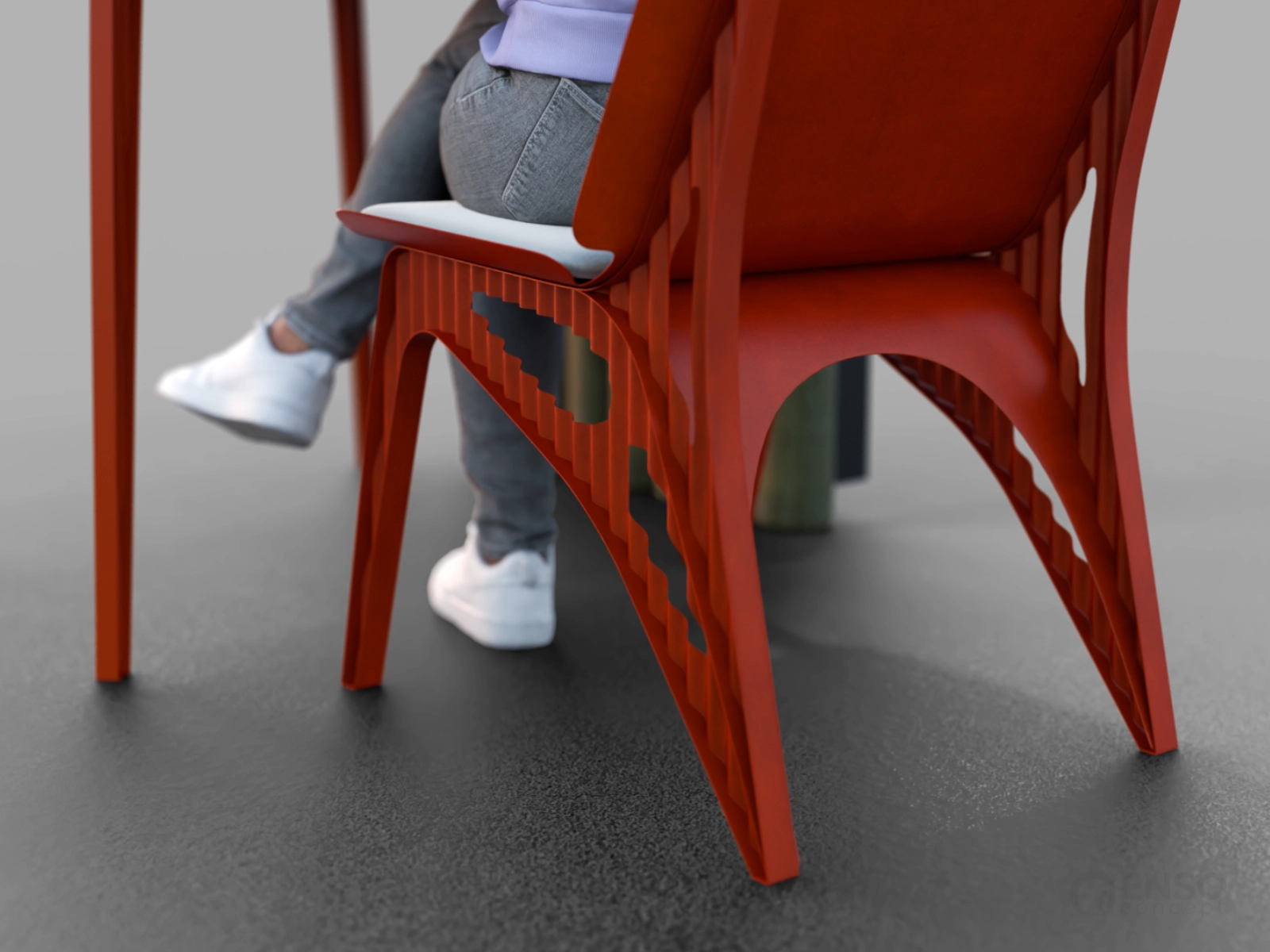
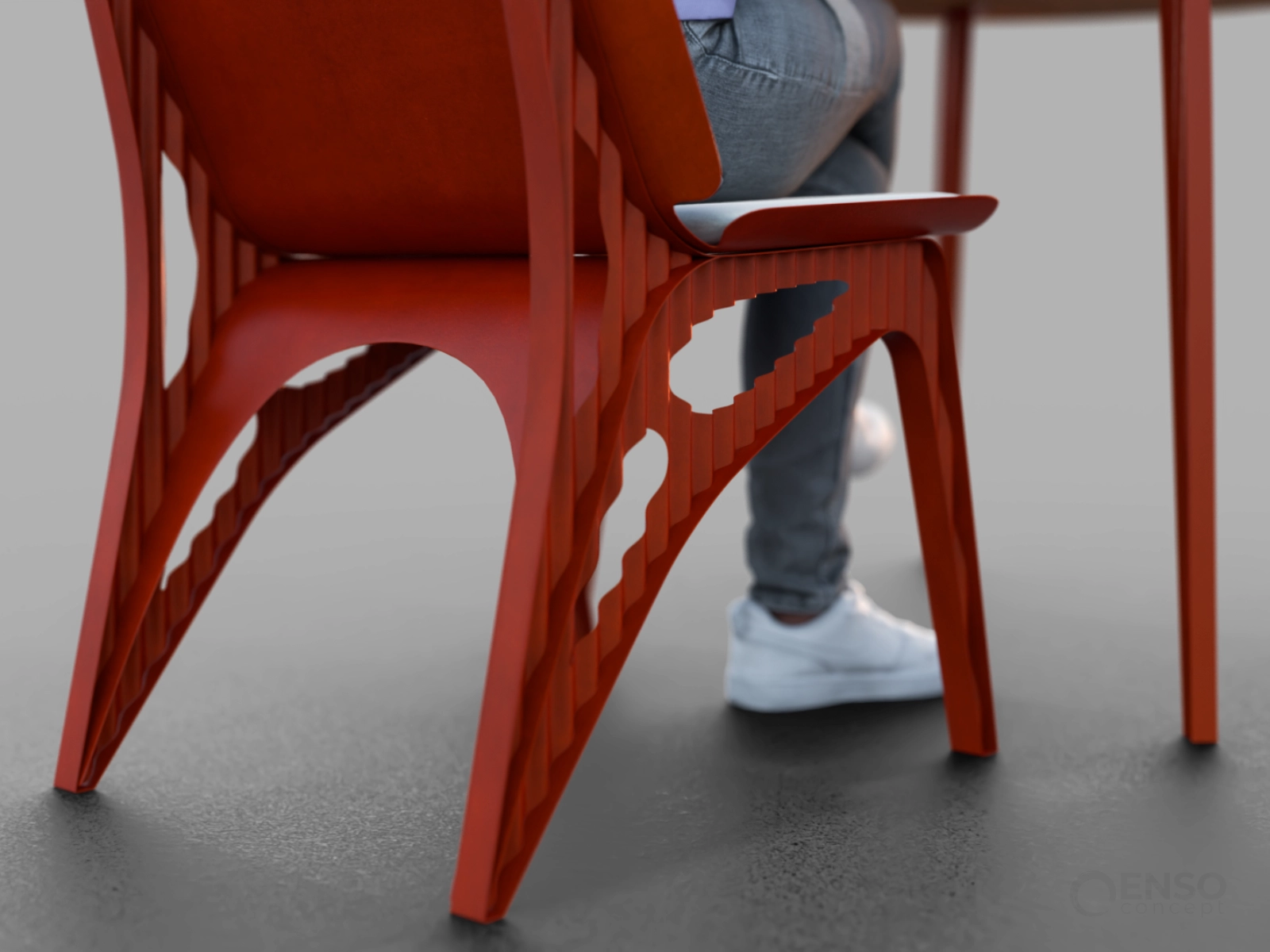
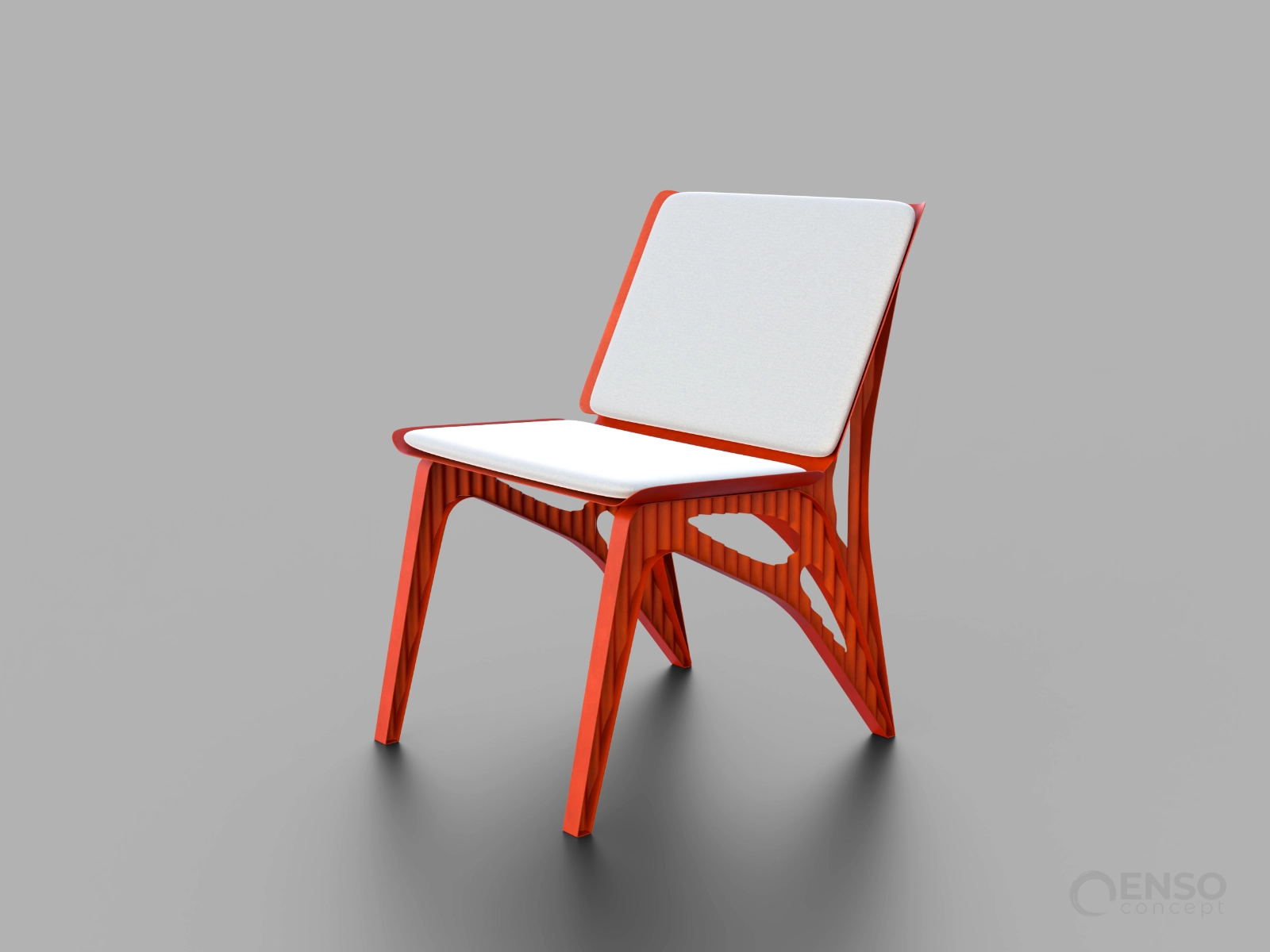
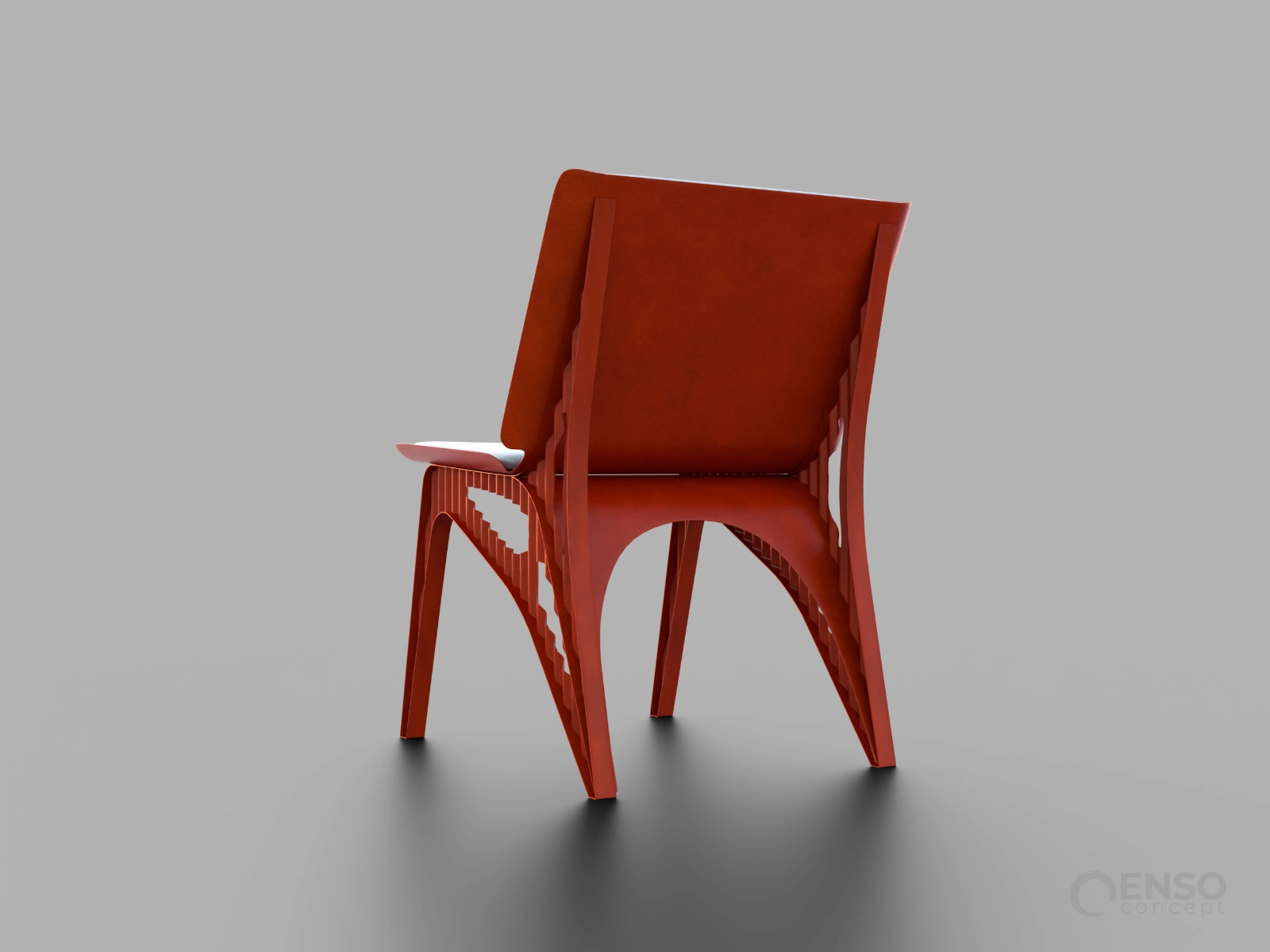
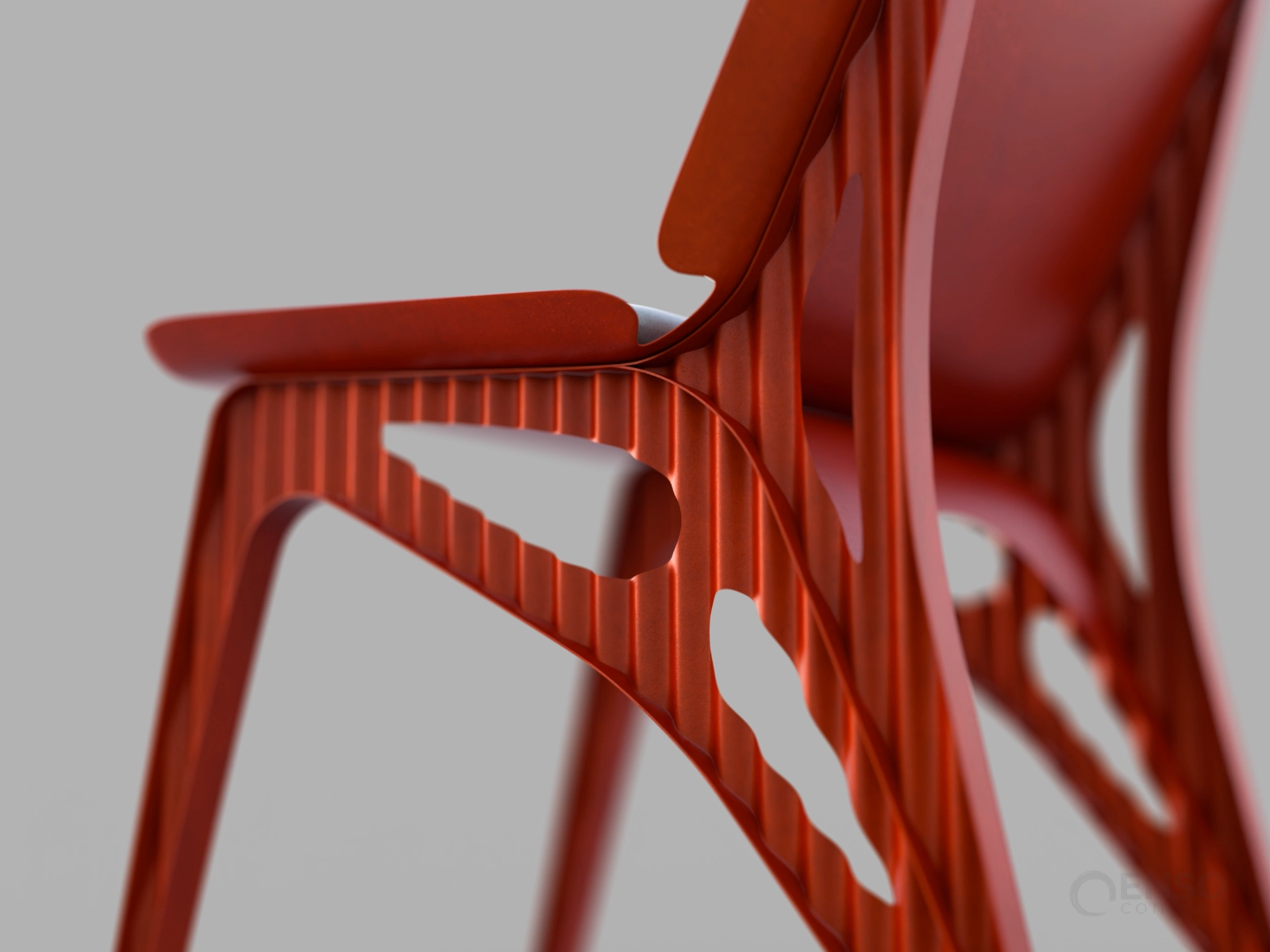
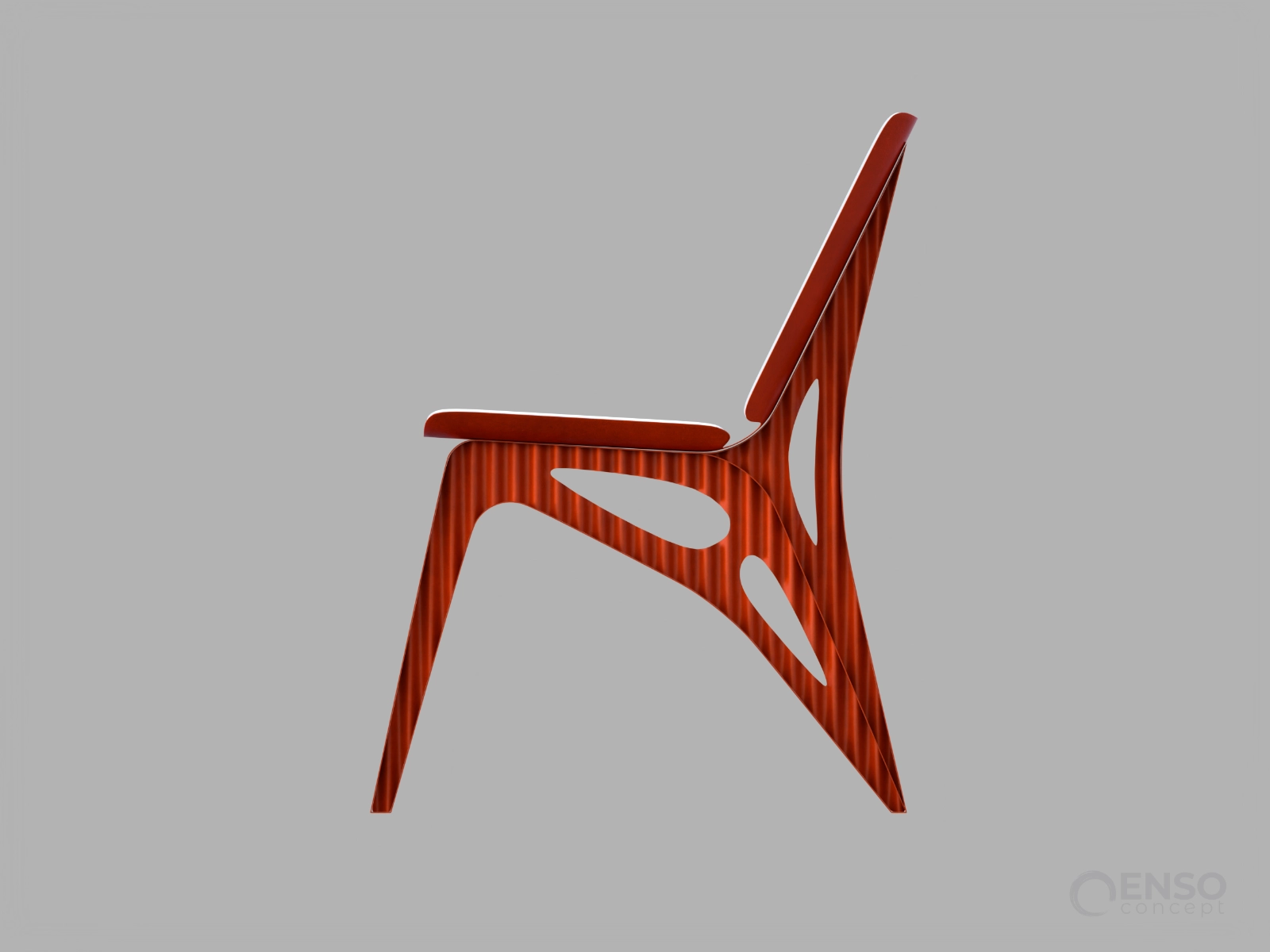
We started with the chair. Instead of a conventional tubular frame, we proposed a fine-pitch profiled steel sheet enclosed between two structural metal bands. The idea follows the principle of an I-beam: the profiled web carries loads, while the outer bands provide rigidity and define the overall silhouette.
This approach turns the load-bearing structure into the chair’s main visual feature.
We also developed a manufacturing sequence around the client’s equipment. The internal components are laser-cut but remain attached to the original sheet by small retaining tabs. The entire sheet then goes through the roll-forming process. Individual parts are separated, their edges finished, and positioned between the structural bands using locating tabs.
Final assembly involves welding from the outer face of the bands, followed by flush grinding to achieve a clean, uninterrupted surface.
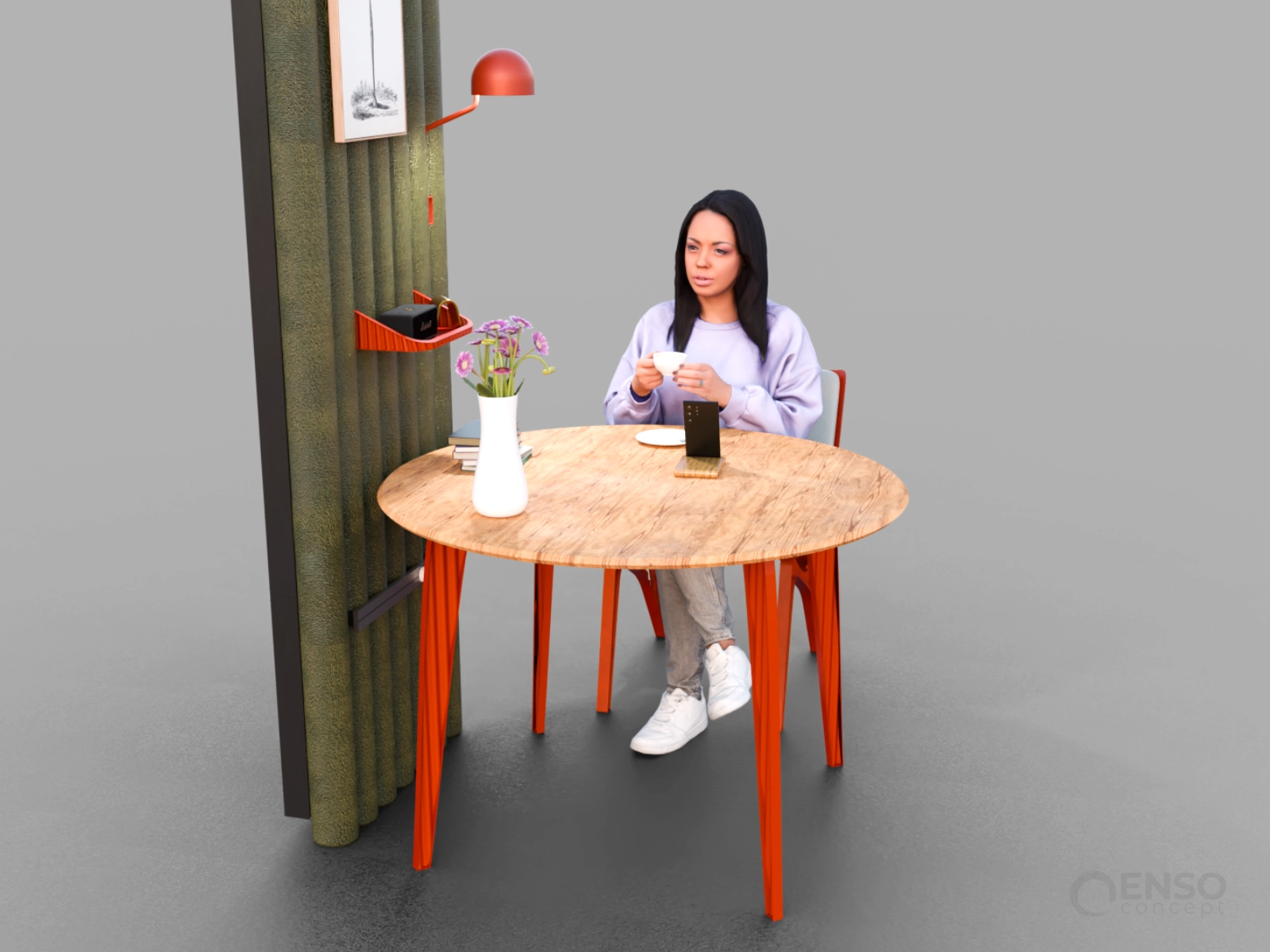
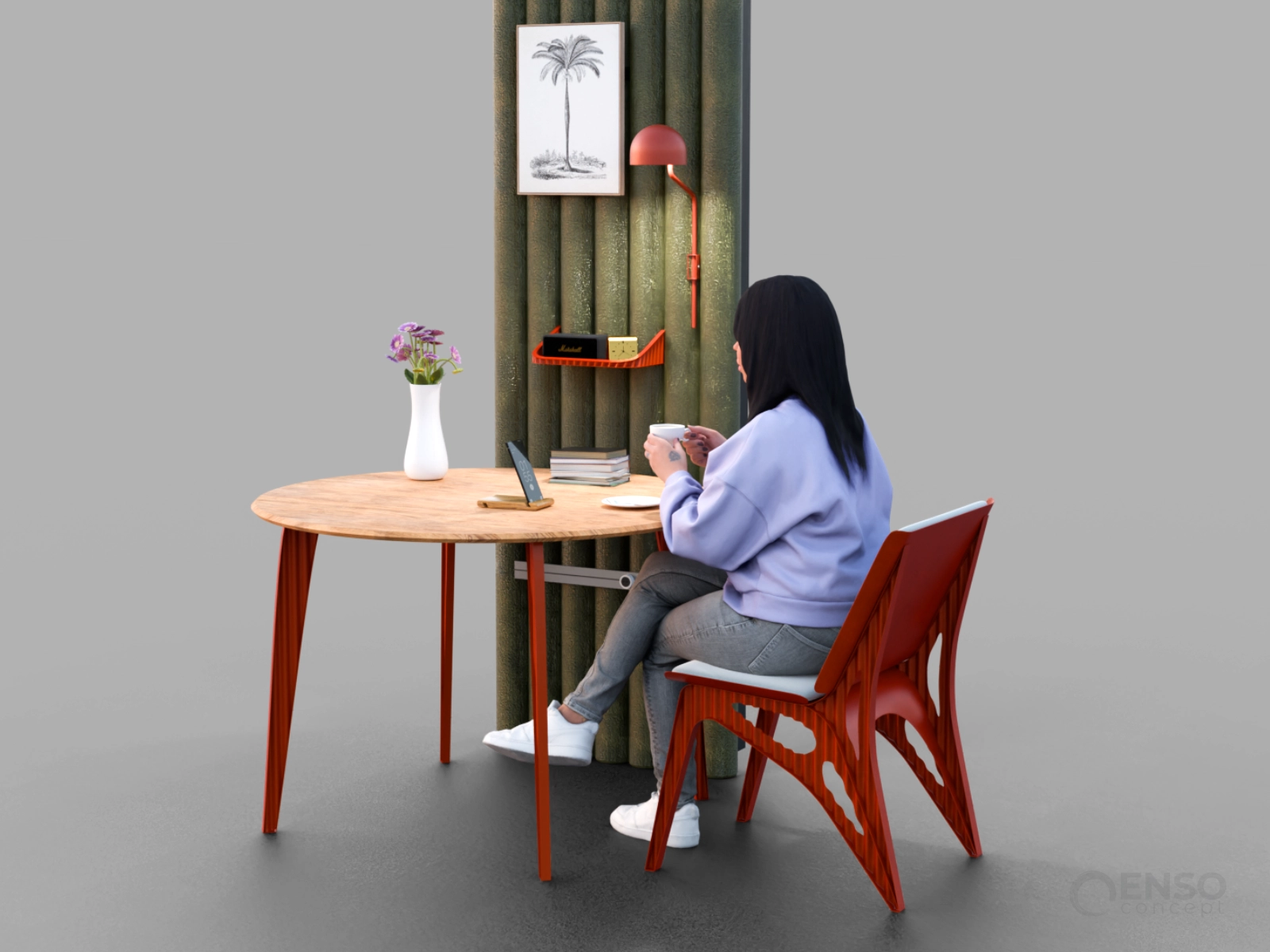
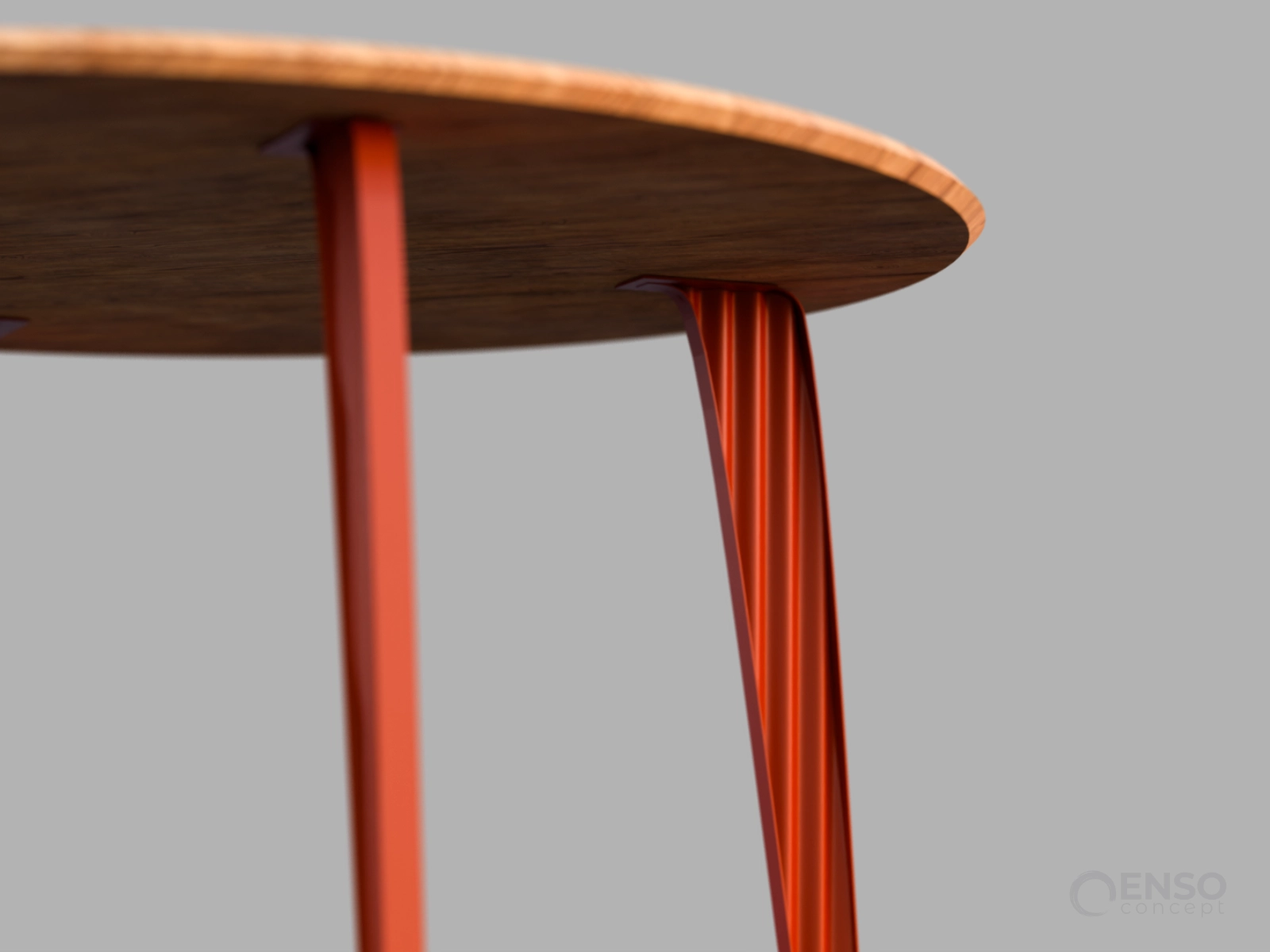
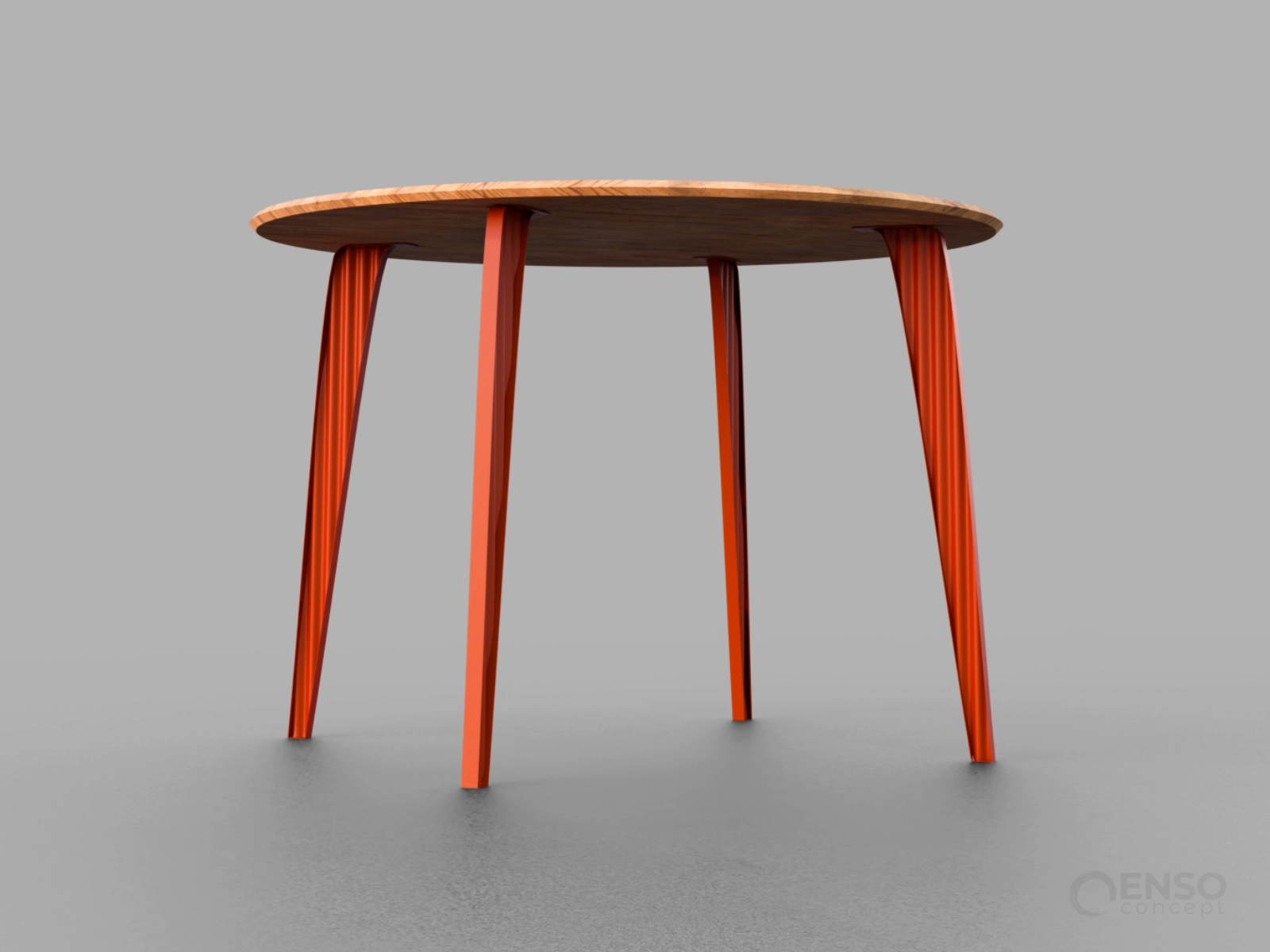
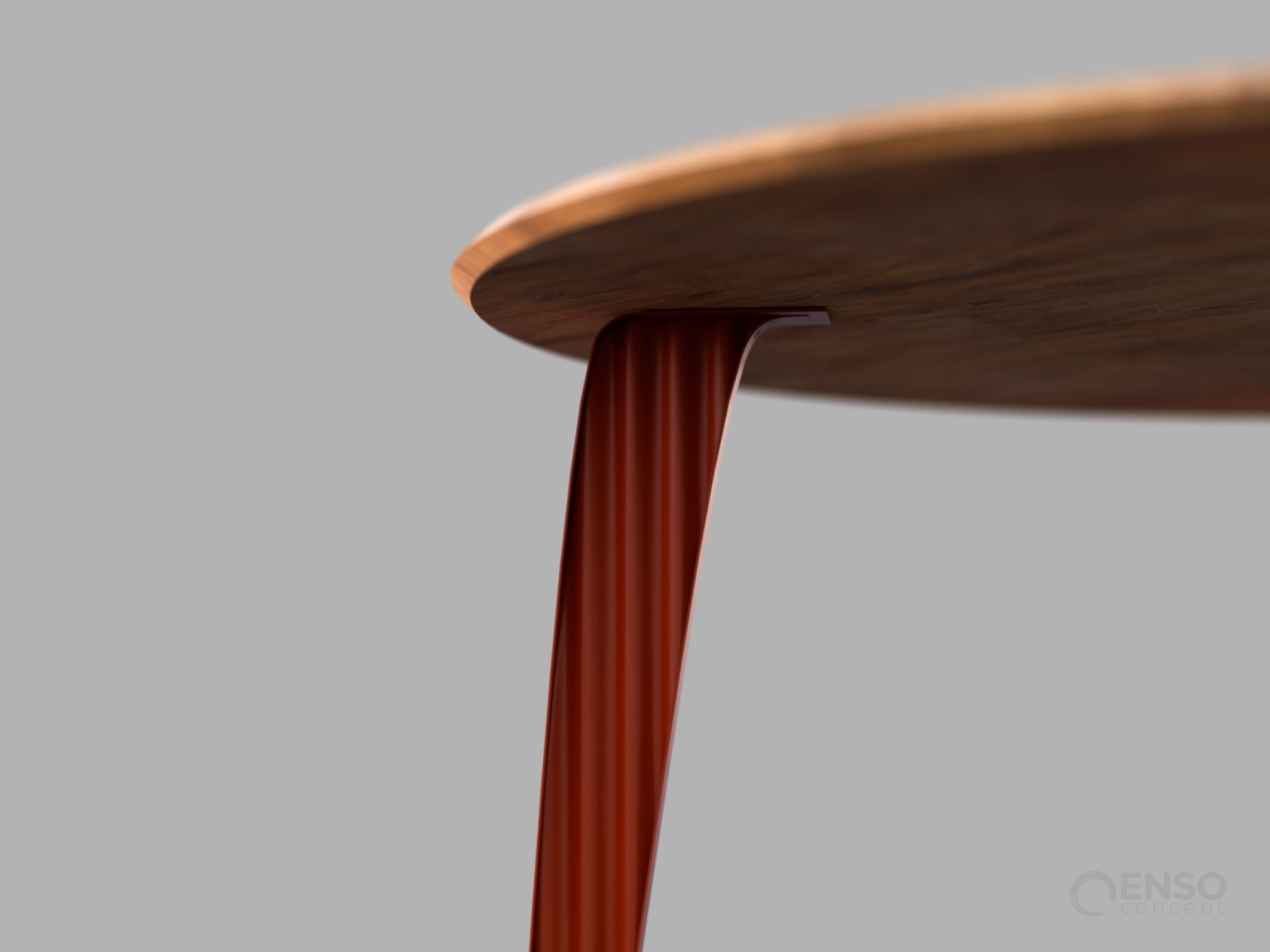
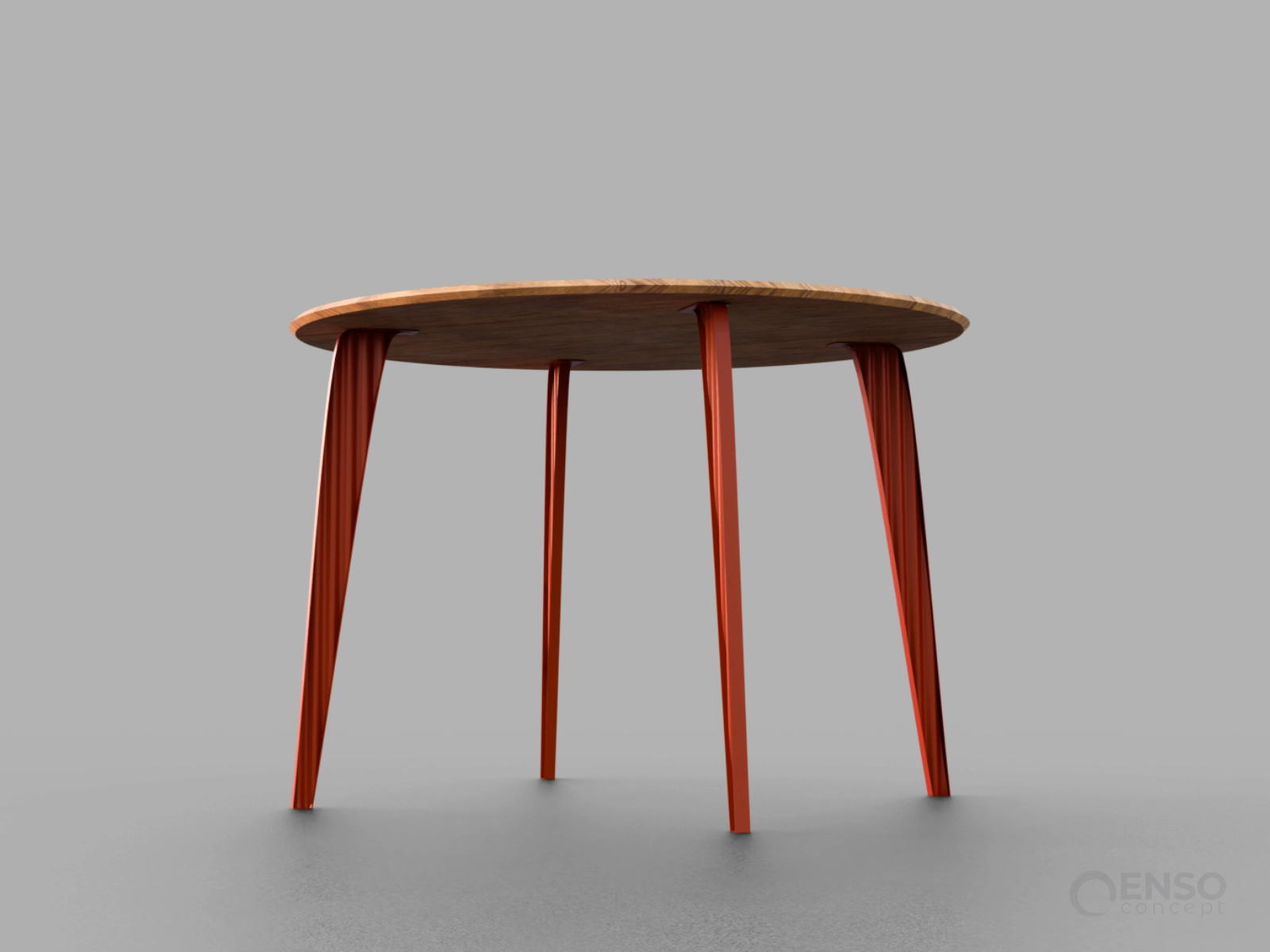
We carried the same structural principle over to the table, establishing a consistent design language across the furniture collection. Once again, profiled steel is not simply a decorative feature. It forms part of the load-bearing structure, with the outer bands defining the geometry of the legs and the exposed profile becoming the main visual accent.
The round tabletop, in contrast, was deliberately kept simple. Its calm, uninterrupted surface balances the expressive metal base without adding unnecessary visual complexity.
Our intention was to demonstrate how a single engineering principle could be applied to different types of furniture while maintaining a recognisable identity. The construction also remains compatible with the client’s existing manufacturing processes, without requiring fundamentally new production technologies.
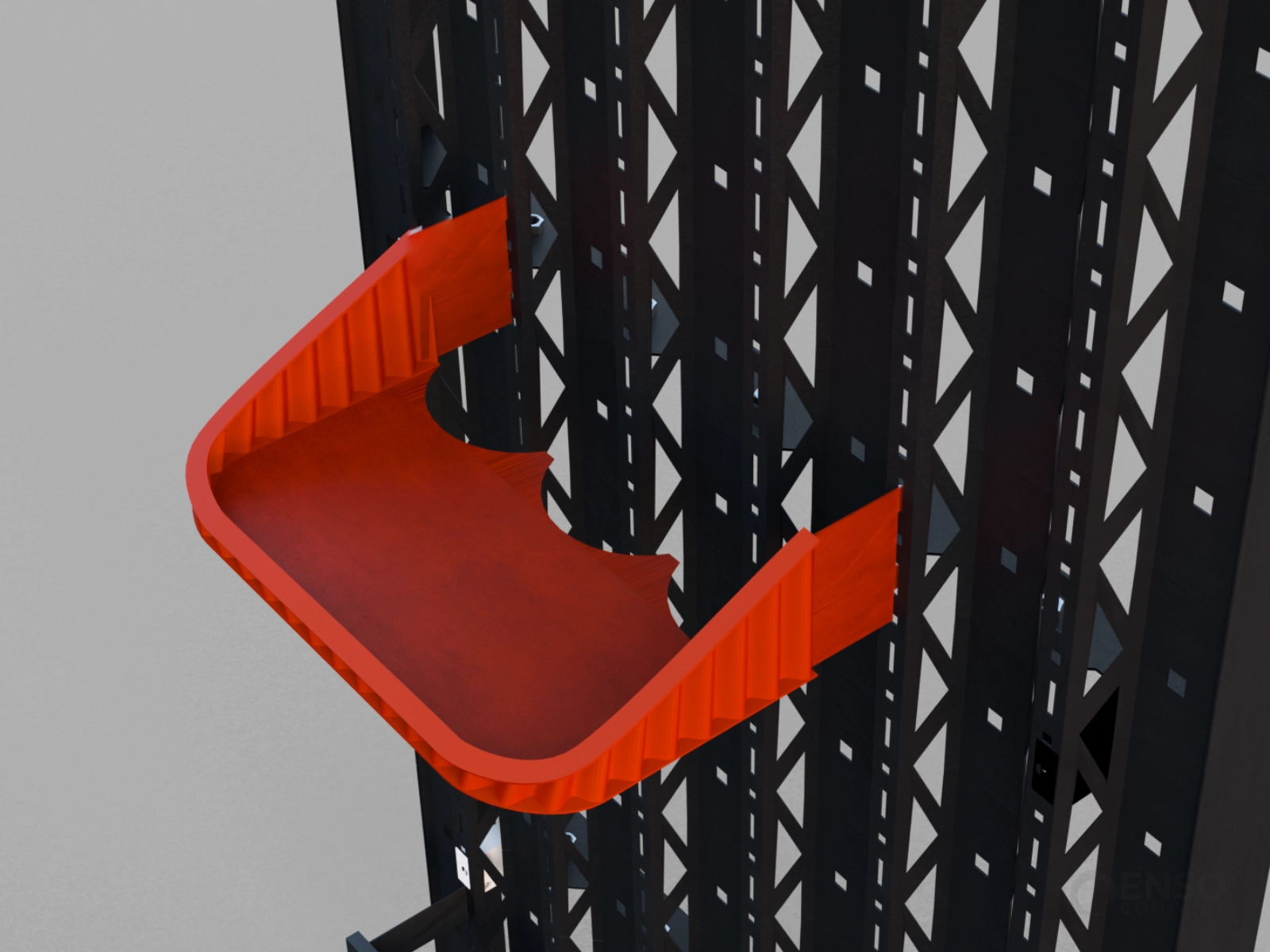
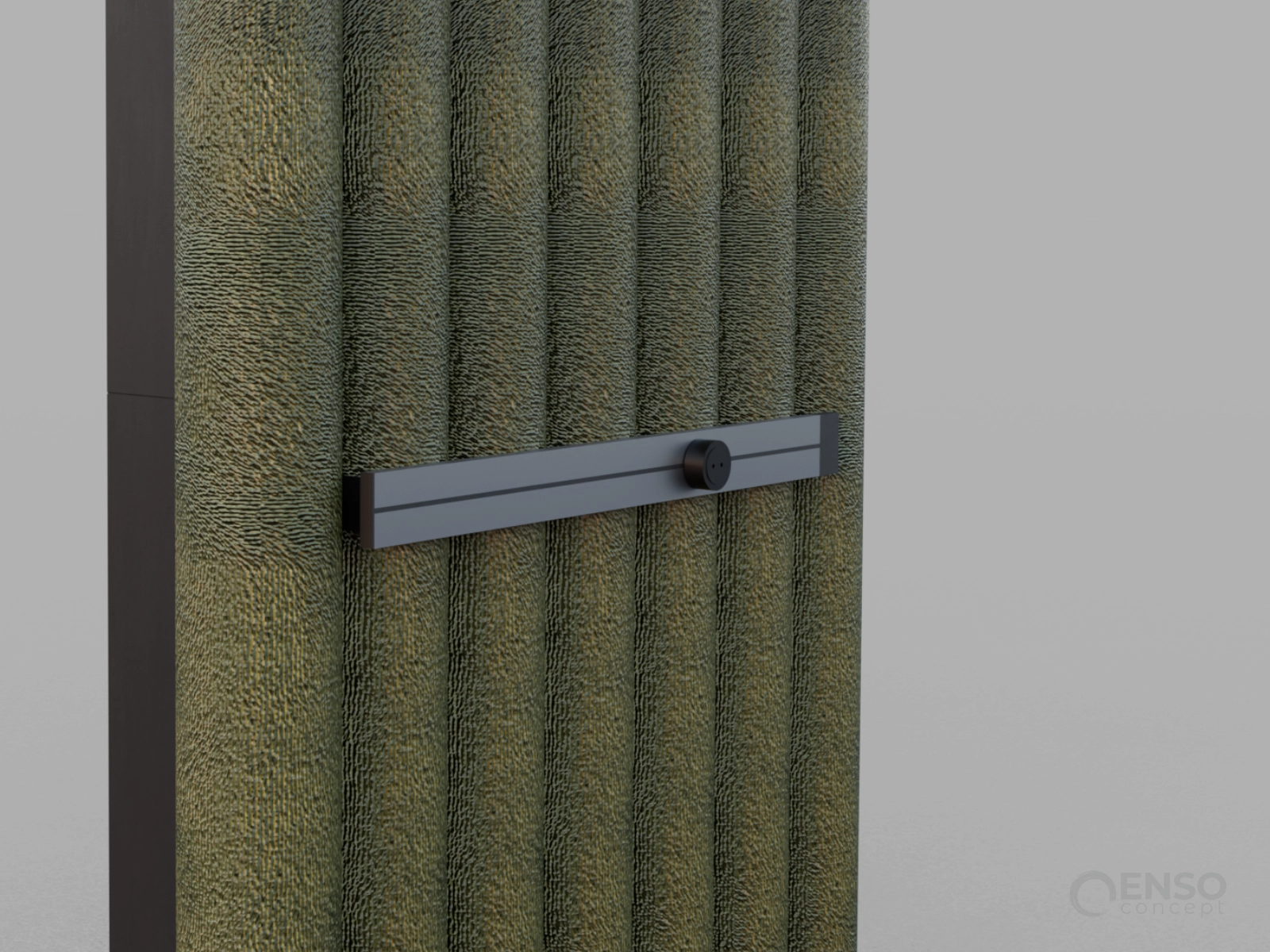
For the wall system, we separated the load-bearing structure from its decorative surface. The frame consists of perforated 700 × 500 mm modules mounted on a universal wall rail and connected with bolts. Adjustable lower supports allow installation without interfering with existing skirting boards. Soft vertical upholstered elements conceal the framework, creating a continuous interior surface without carrying the loads of mounted accessories.
At this stage, the design demonstrates the structural concept rather than its final dimensions. Further development will focus on reducing the overall depth through slimmer wall mounts and replacing the round upholstered elements with chamfered rectangular profiles.
These can be manufactured more easily from widely available PU foam sheets and finished with textile covers. Our preliminary estimate suggests that these changes could reduce the panel depth by approximately half while retaining its core functionality and visual character, subject to further engineering validation.
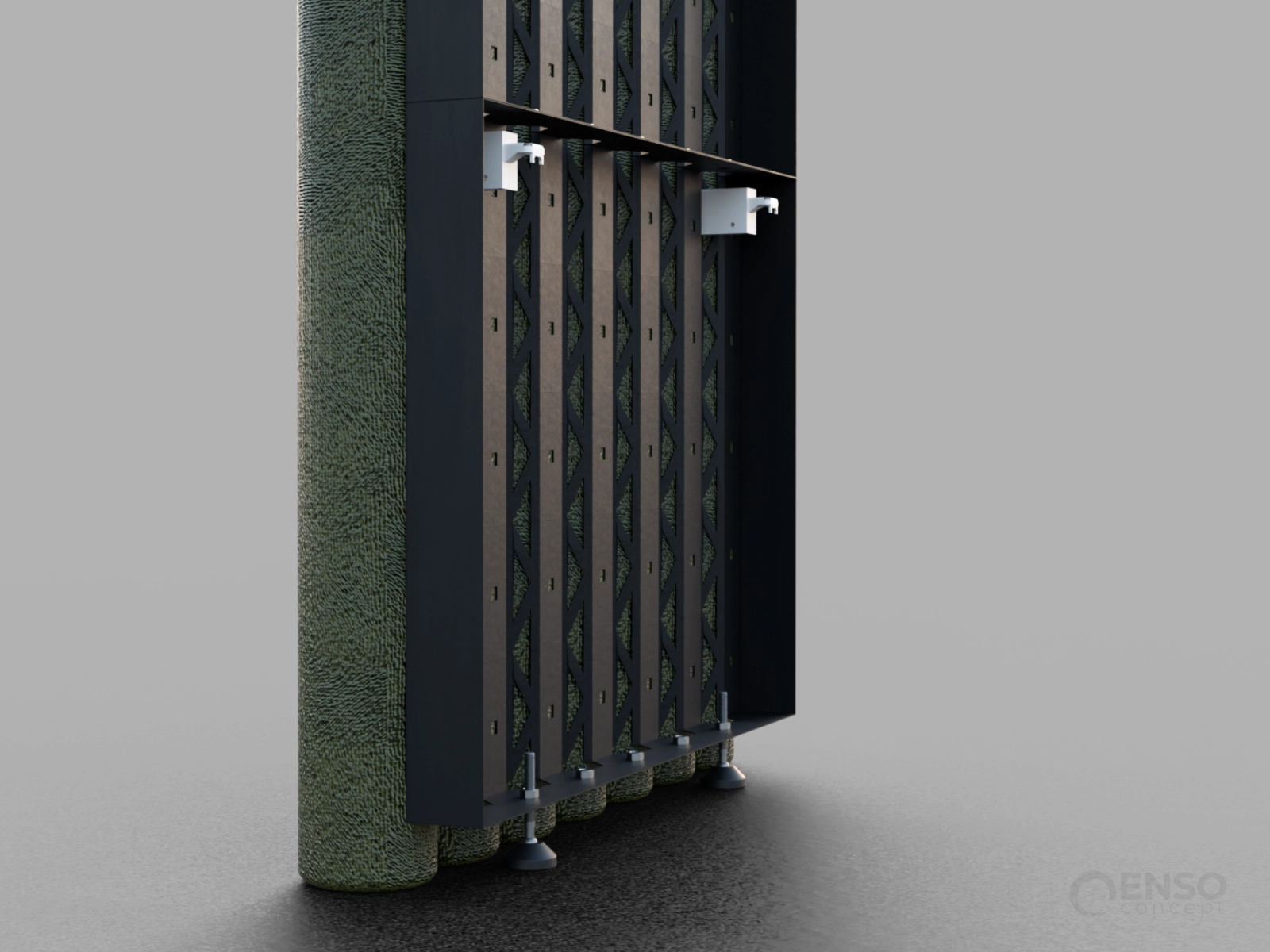
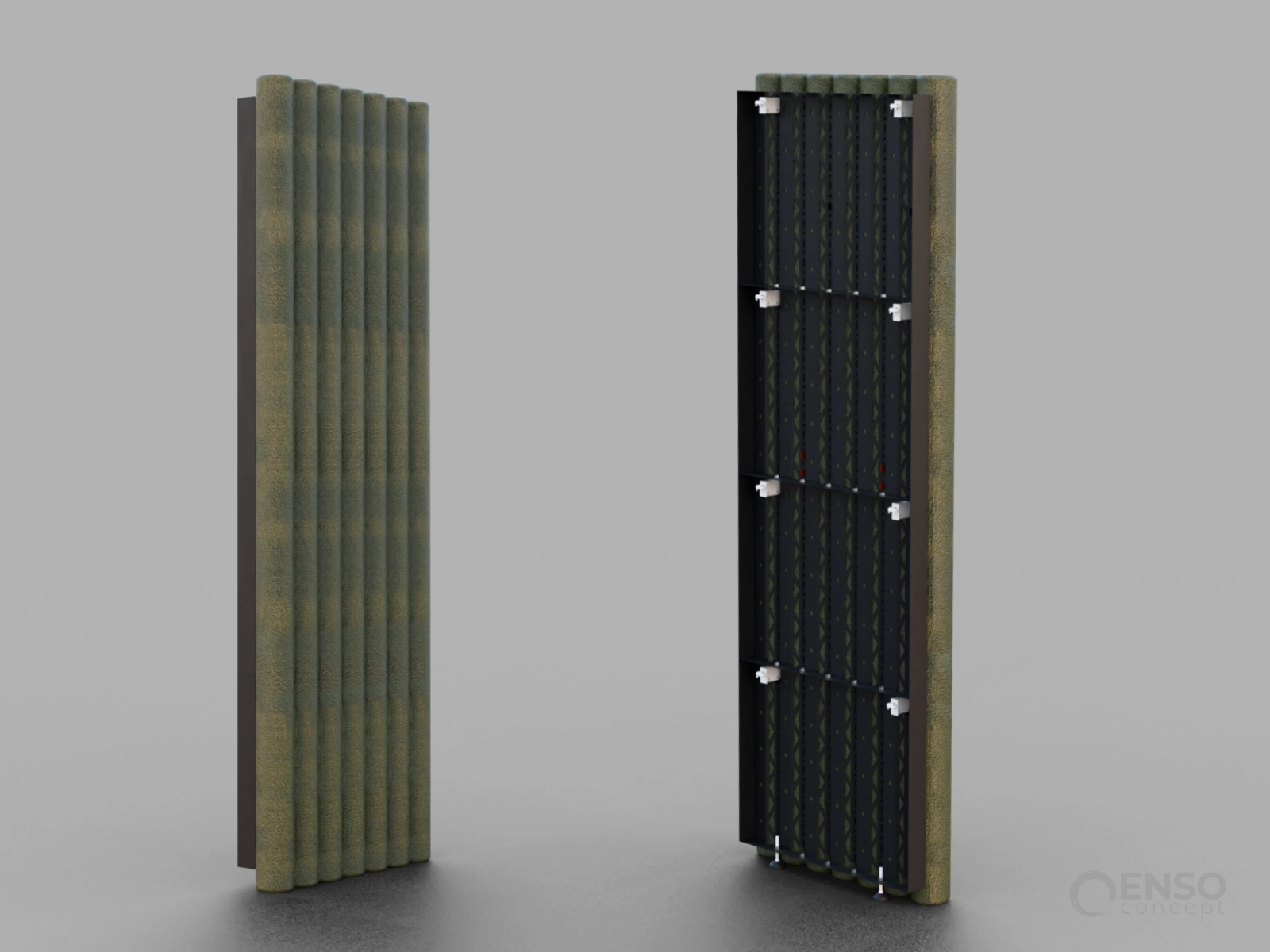
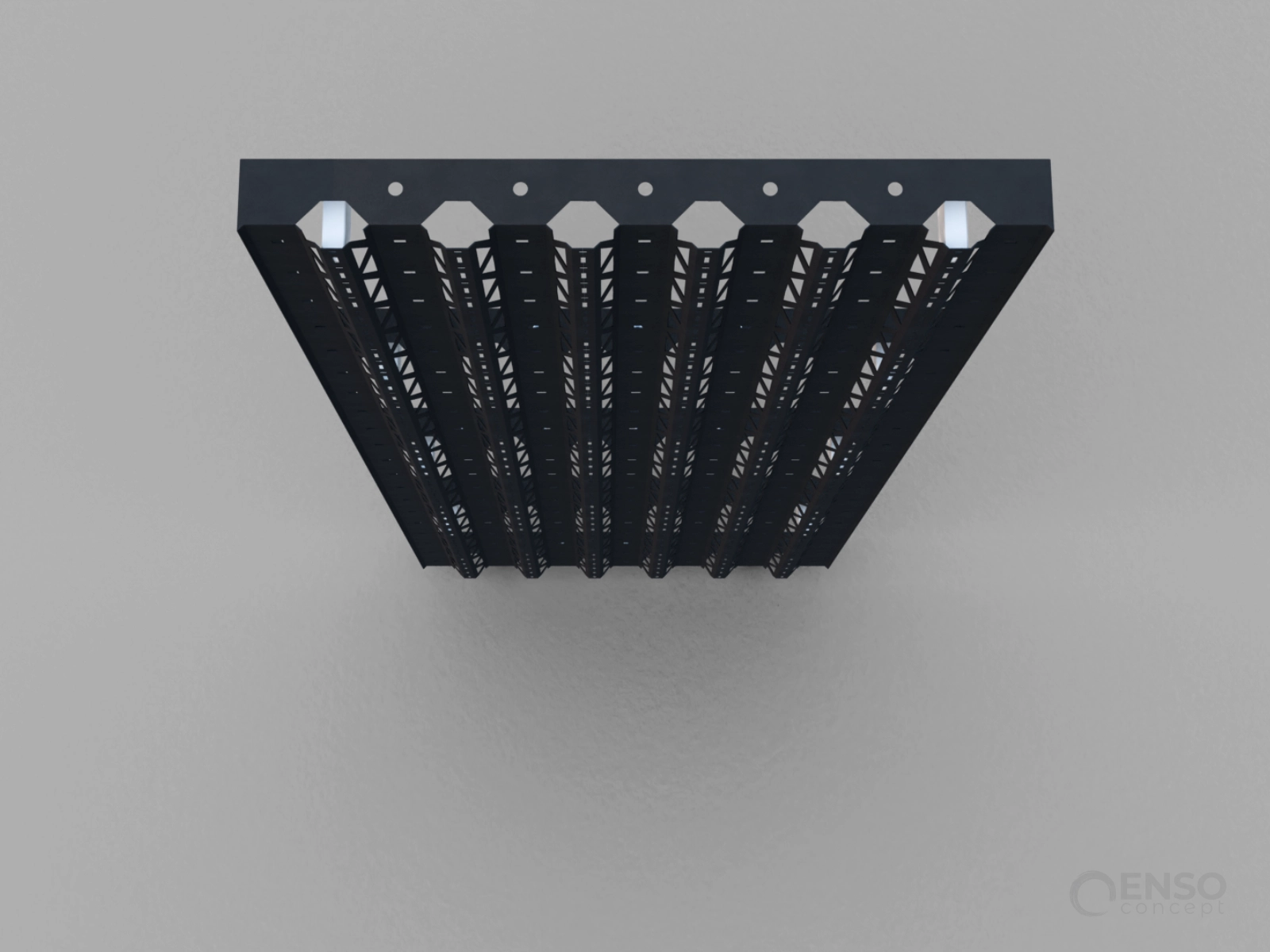
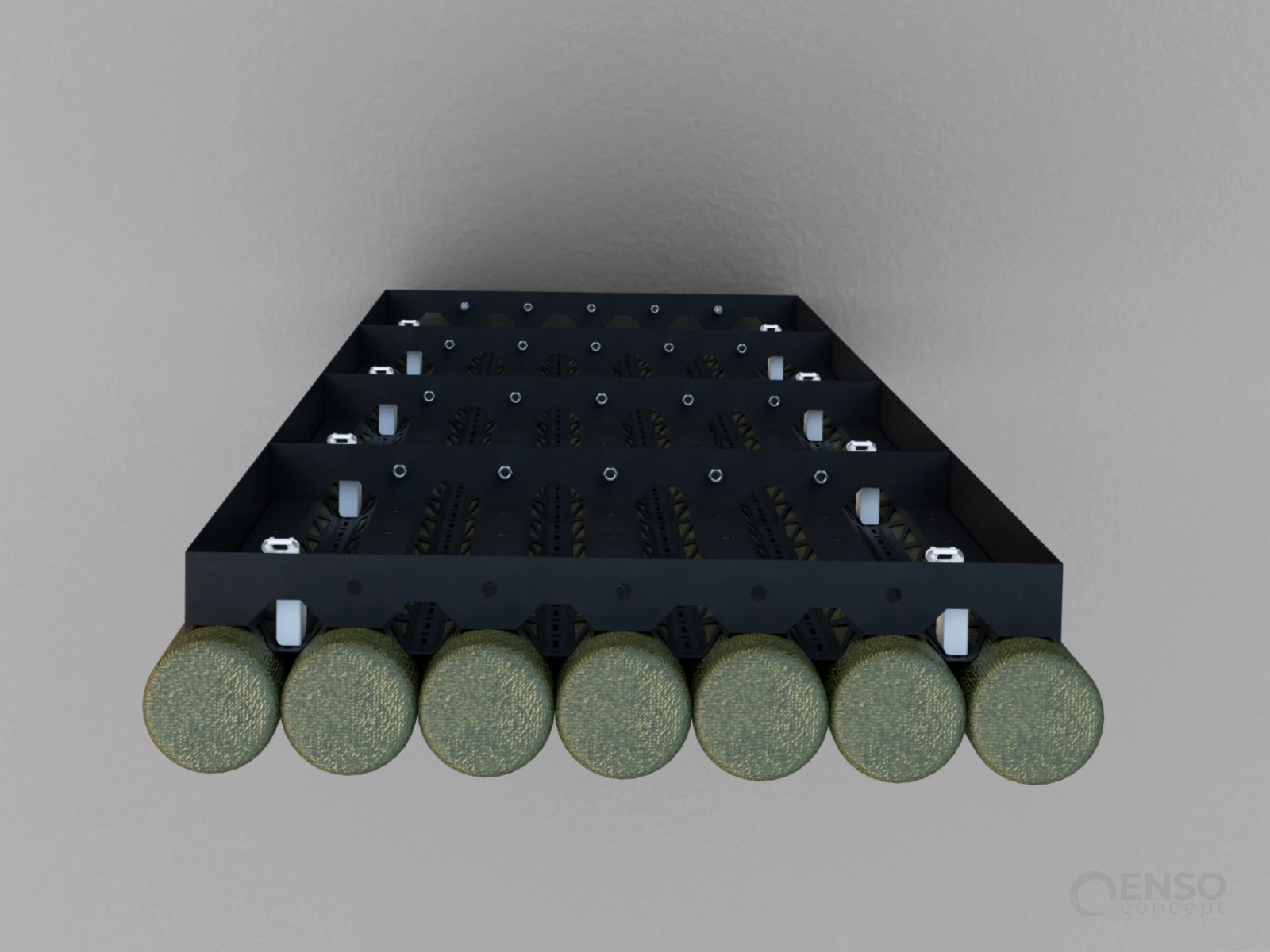
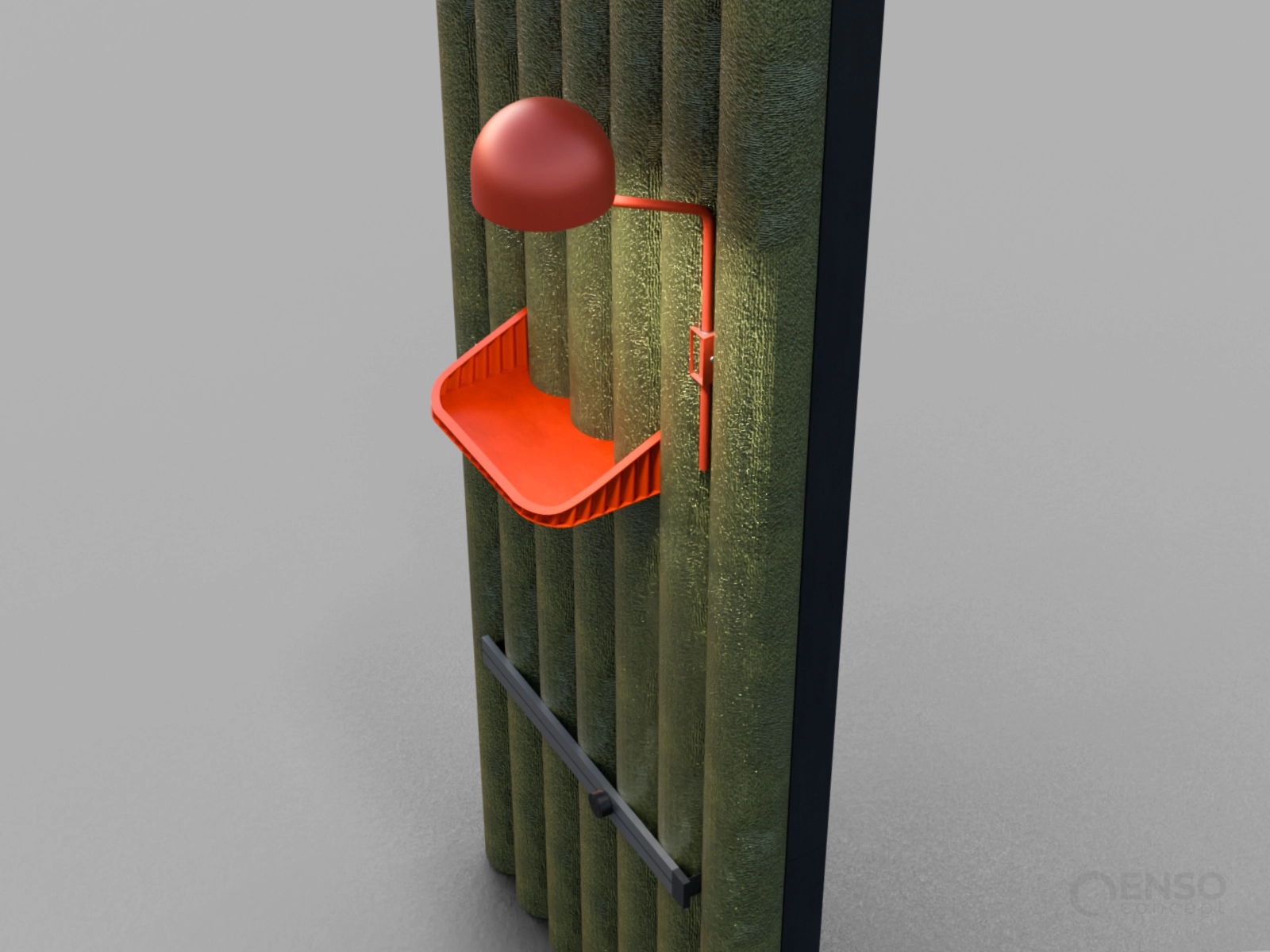
Separating the decorative surface from the structural frame allowed us to turn the wall panel into a universal mounting system.
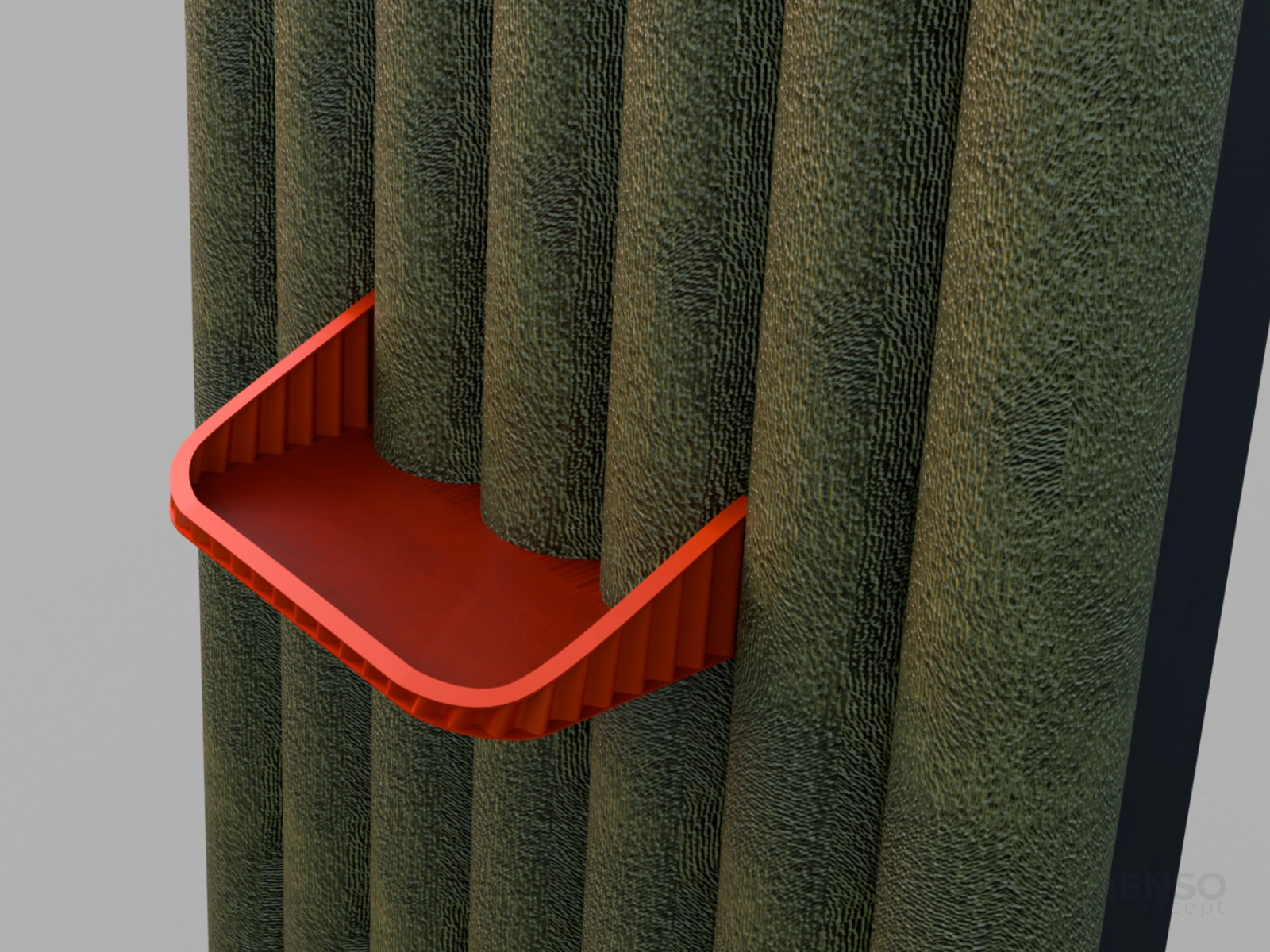
Rather than relying on magnets, we developed a mechanical interface based on perforated sheet metal, designed to accommodate a wider range of loads and accessories.
L-shaped adapters pass between the soft upholstered elements and attach directly to the supporting frame. Shelves, holders, artwork, clocks and other interior objects can be mounted and rearranged as needed.
We also considered power outlets and cable management. Wiring can enter through the gaps between the upholstered elements, run inside the frame and emerge wherever required. This makes it possible to position outlets closer to where they are actually used while keeping the technical infrastructure hidden behind the decorative surface.
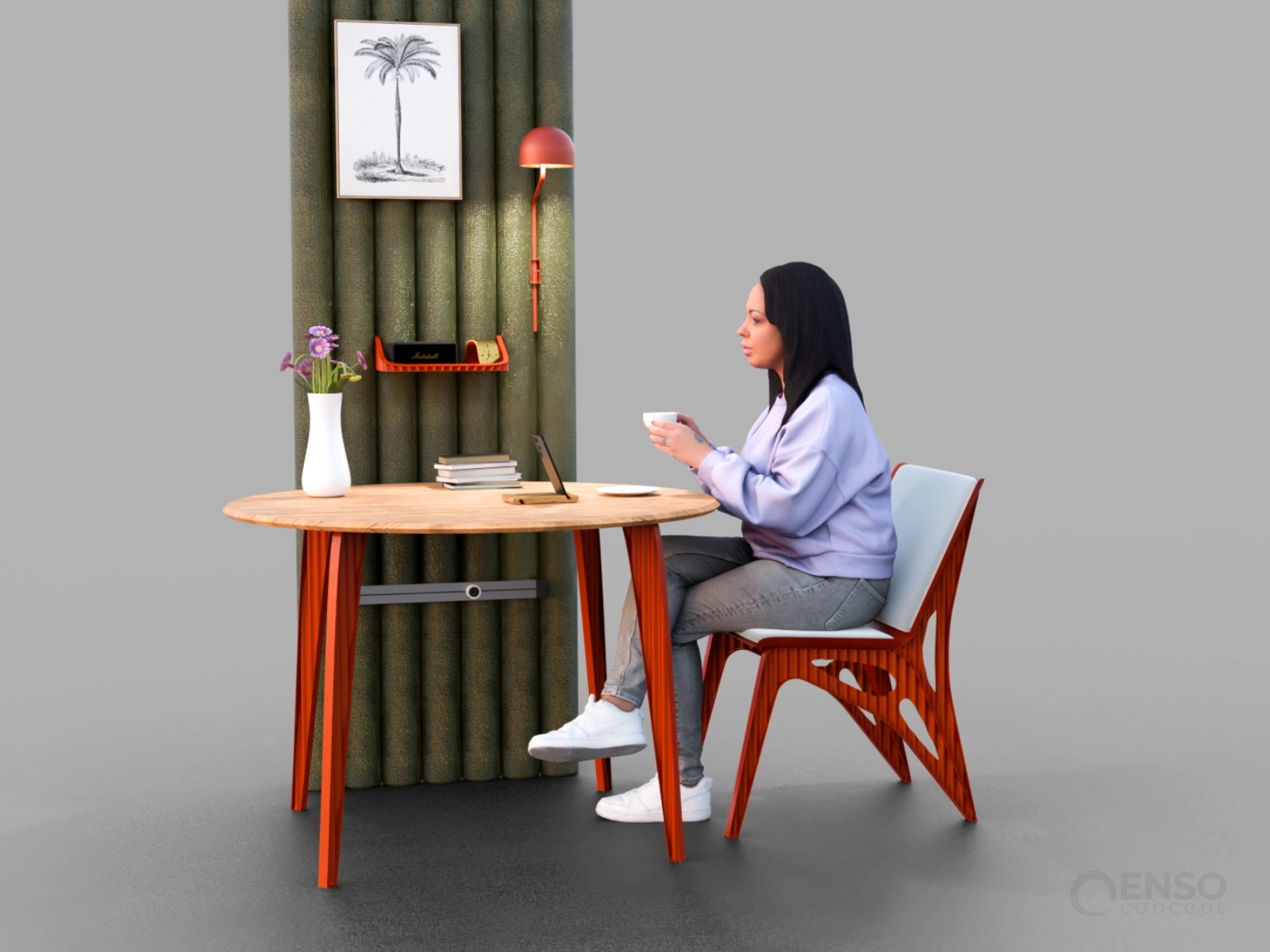
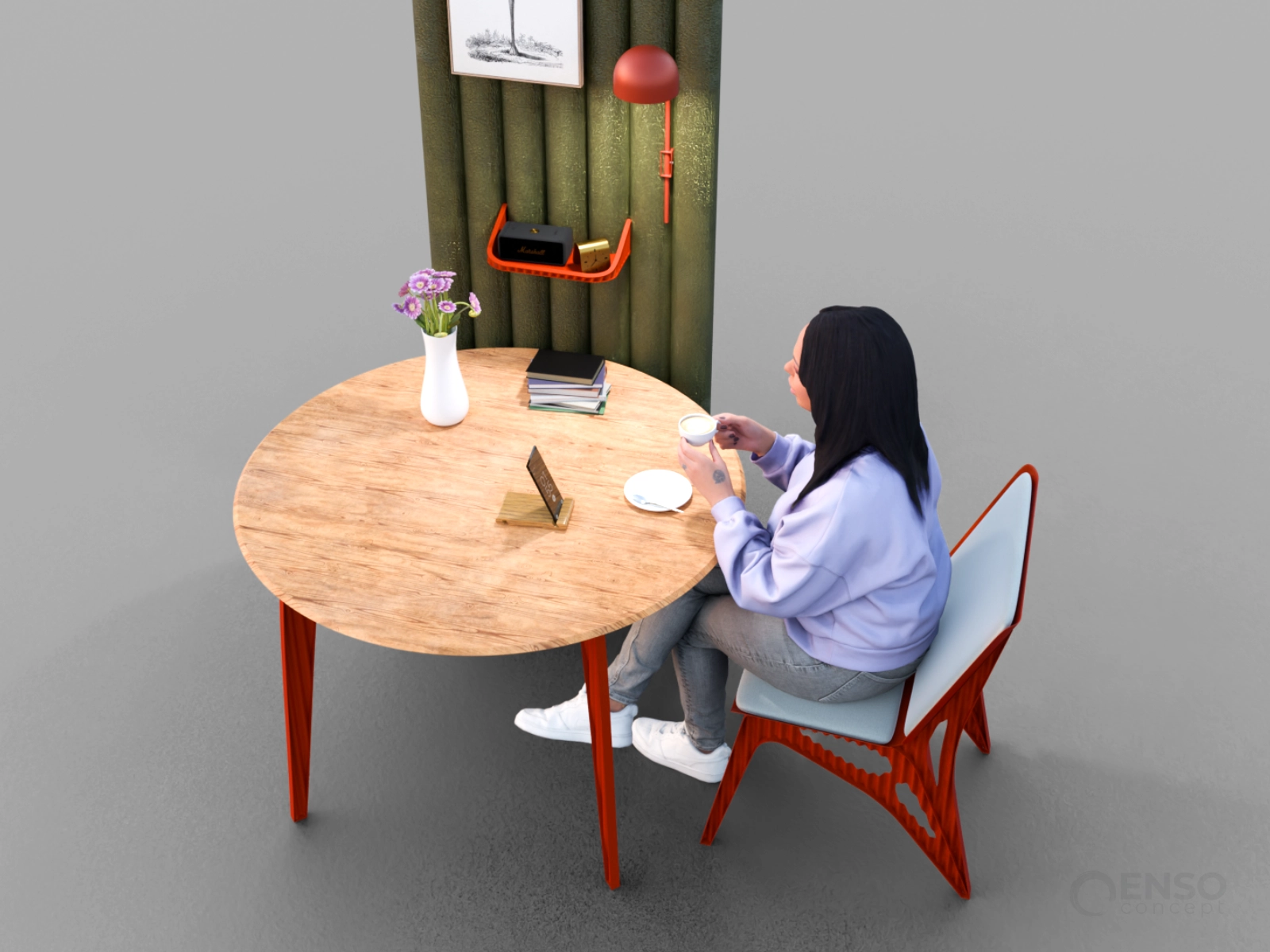
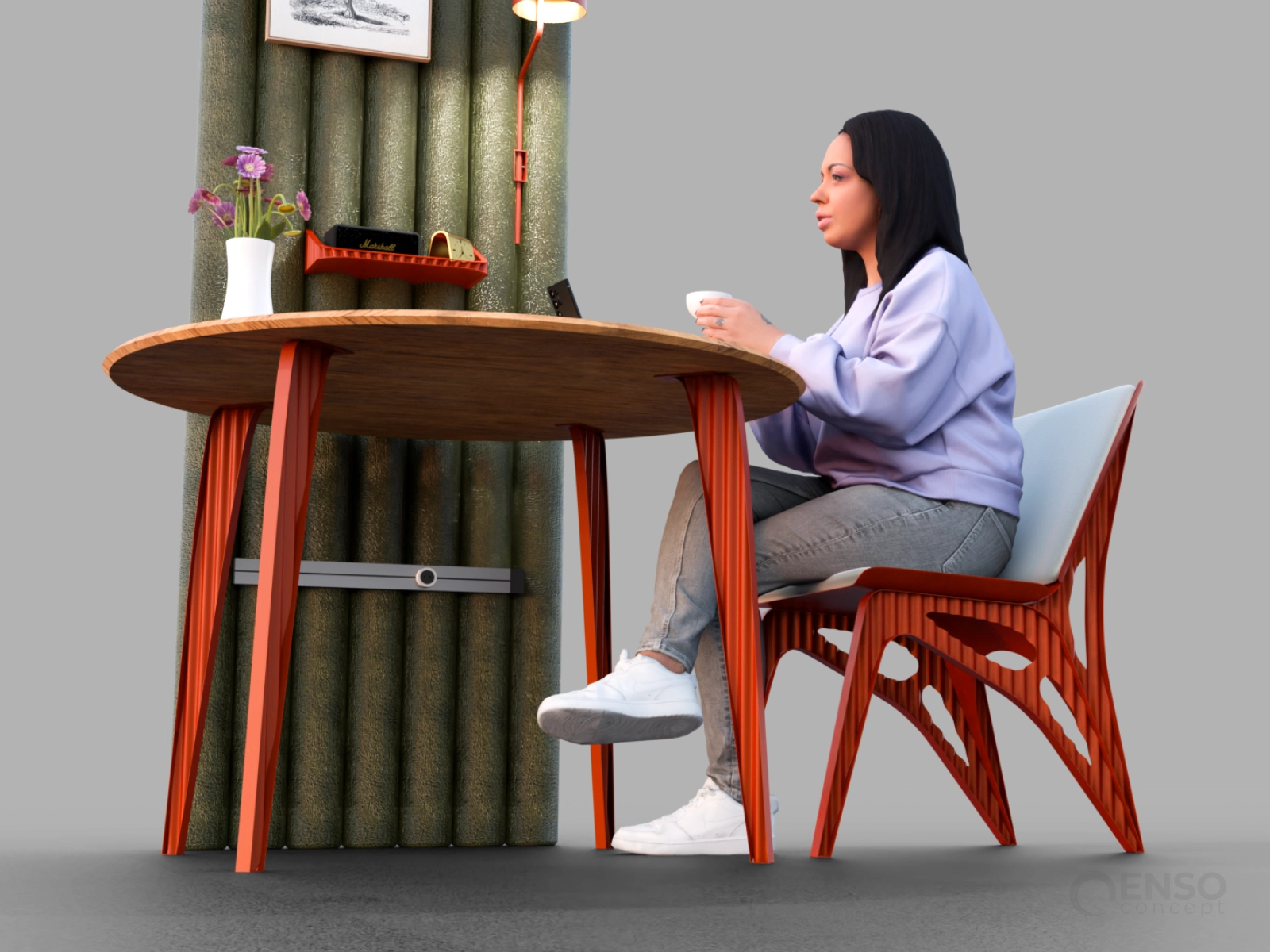
Finally, we brought all the elements together in a complete interior composition. We wanted to see how the expressive geometry of the steel furniture would interact with the soft wall panels, textiles, decorative lighting and everyday household objects.
The result is a deliberate contrast: cool metal creates a lightweight structural outline, while the upholstered vertical surface brings warmth and rhythm to the interior.
The functional layout is not fixed, either. Accessories can be rearranged, additional elements introduced, and lighting or power outlets moved closer to where they are needed.
Instead of treating the interior as a finished arrangement, the system allows it to evolve over time, adapting to changing needs without requiring a complete renovation.
Result:
Rather than designing several unrelated objects, we developed a unified interior product concept in which furniture, wall panels and accessories share a common structural logic, material approach and visual identity.
Equally important was the manufacturing side. The products were conceived around the client’s existing equipment and processes, with structural principles and production sequences considered from the outset. Further engineering optimisation, component validation and prototyping will be required, but the underlying product architecture was designed with real manufacturing conditions in mind.
Perhaps the most interesting aspect of this project is that we never tried to disguise the material’s industrial origins. Instead, we used its properties as the starting point for the design, turning familiar sheet metal fabrication technologies into the foundation of a new, expandable interior product family.
Running a sheet metal manufacturing business?
We can help turn your existing production capabilities into new products — from initial concept and industrial design to engineering development.