
Industrial Pump Unit Enclosure
Design — Denis Zarembo
Challenge:
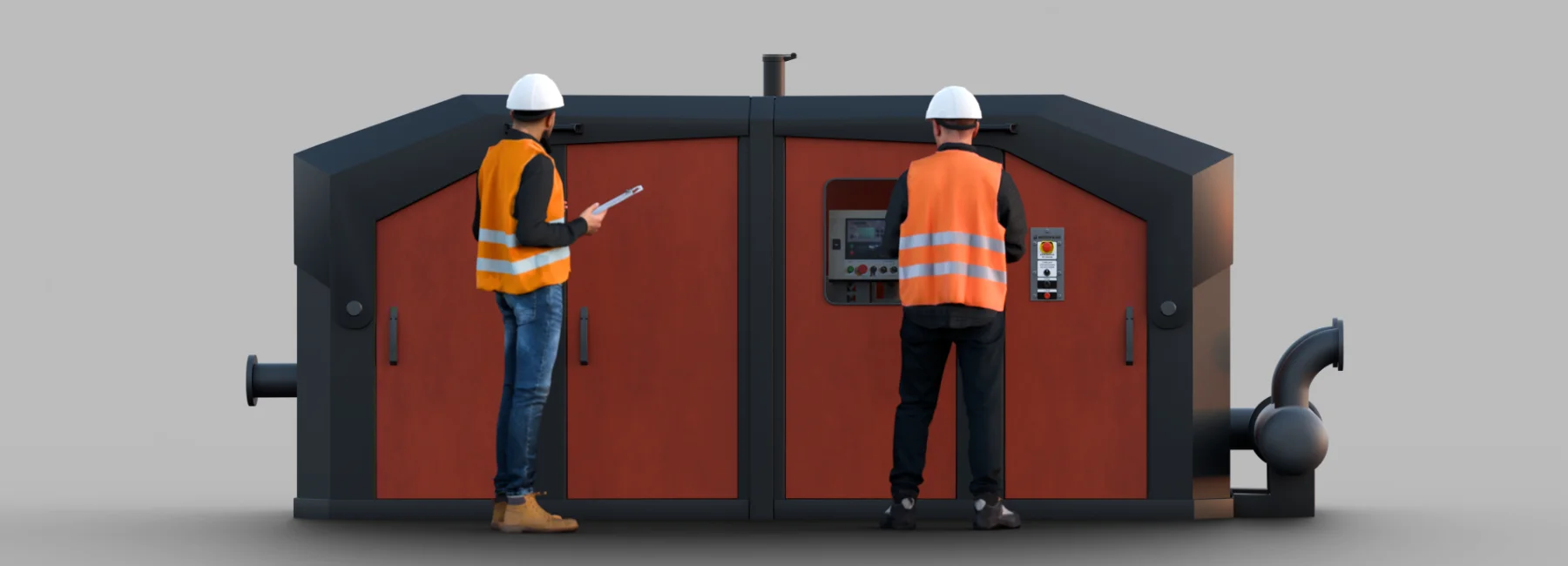
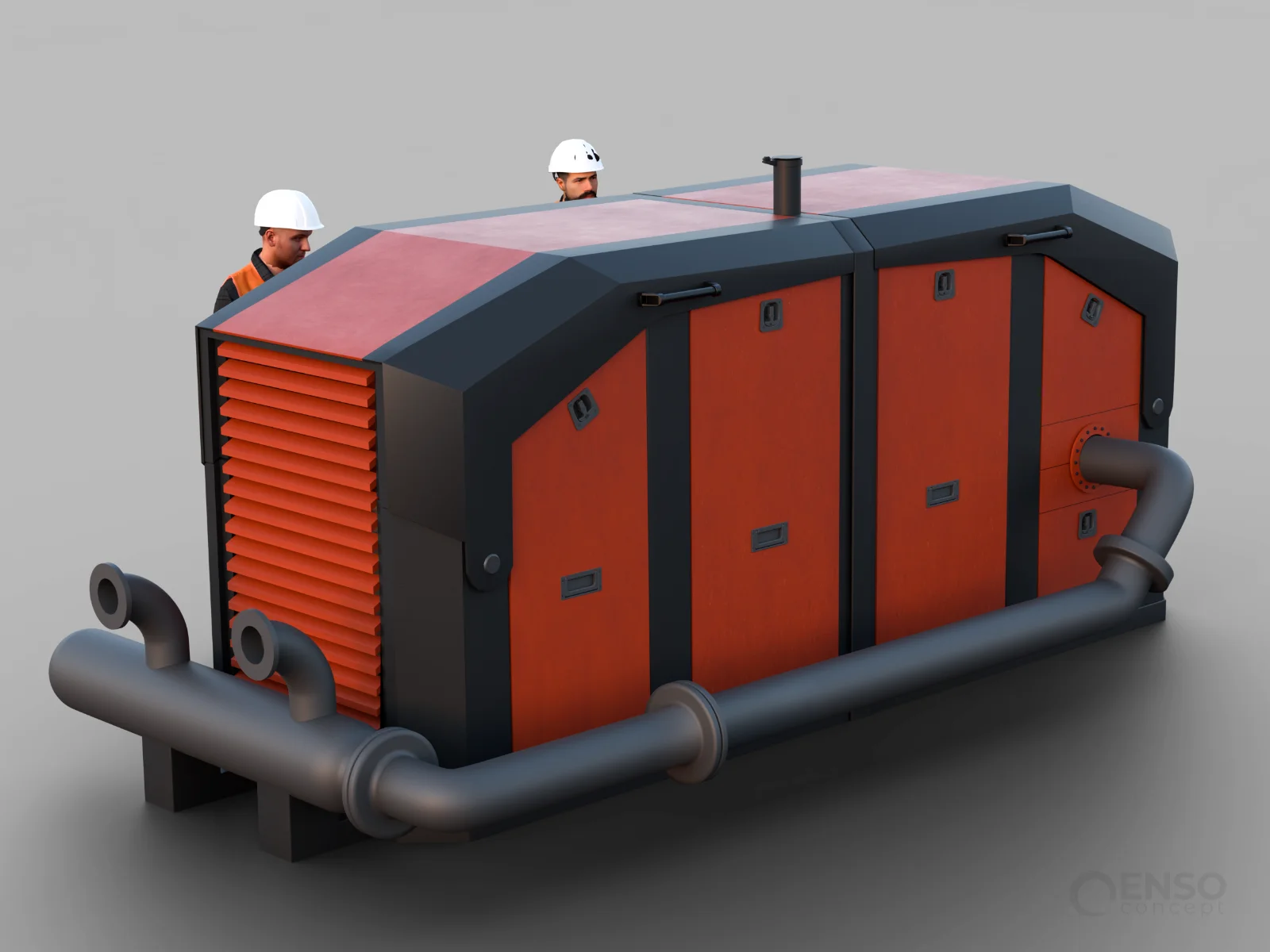
Design an enclosure for a large industrial pump unit: bring its fragmented technical elements into a coherent whole, protect the equipment from the elements, and still provide full access to the motor, pump, controls, pipework and other service areas. The project came with several hard constraints. The unit is designed to operate outdoors, 24/7/365, while most of its geometry is already dictated by the equipment, pipework and connection points. Simply placing an attractive shell around the pump was not enough.
Solution:
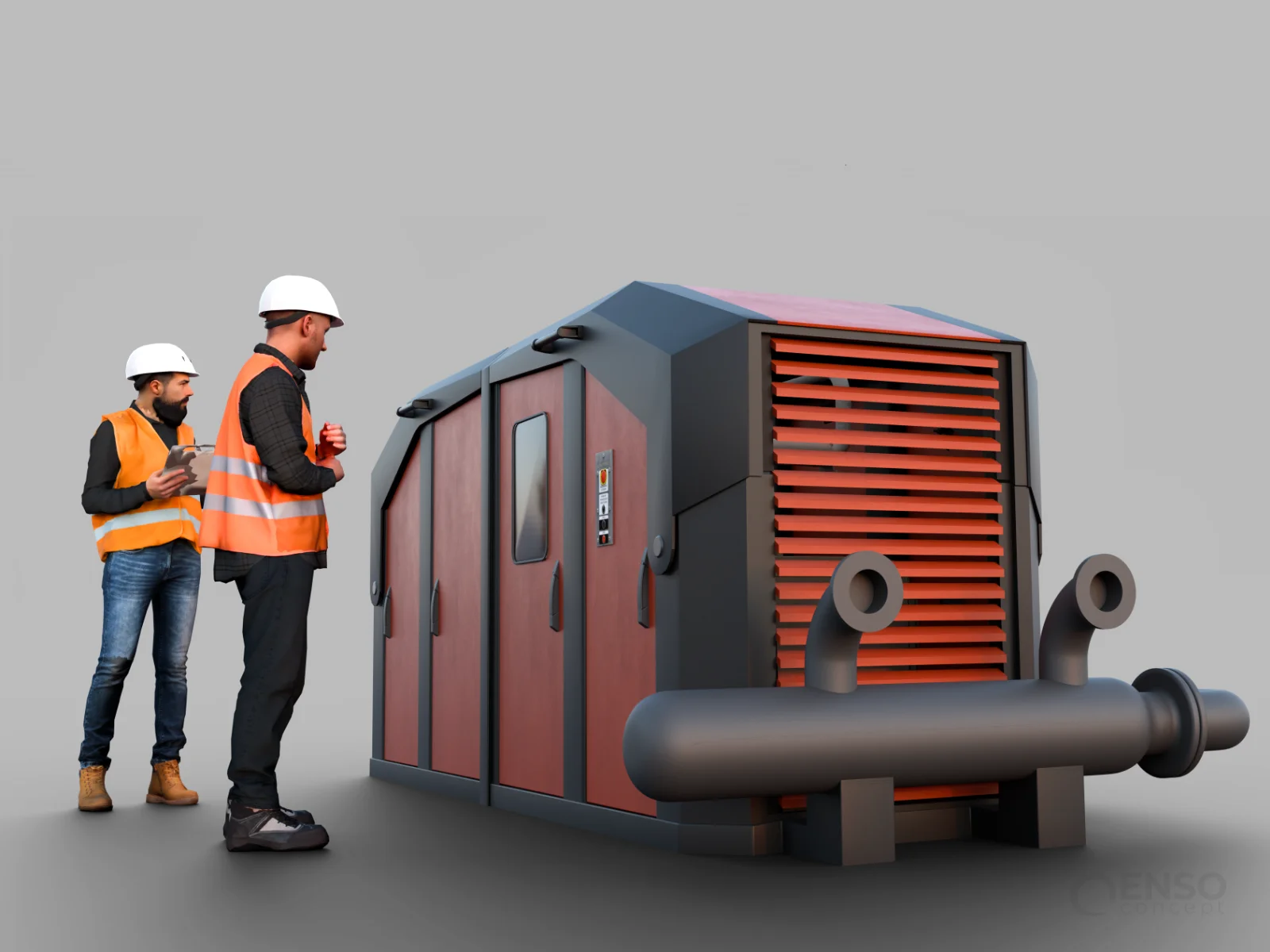
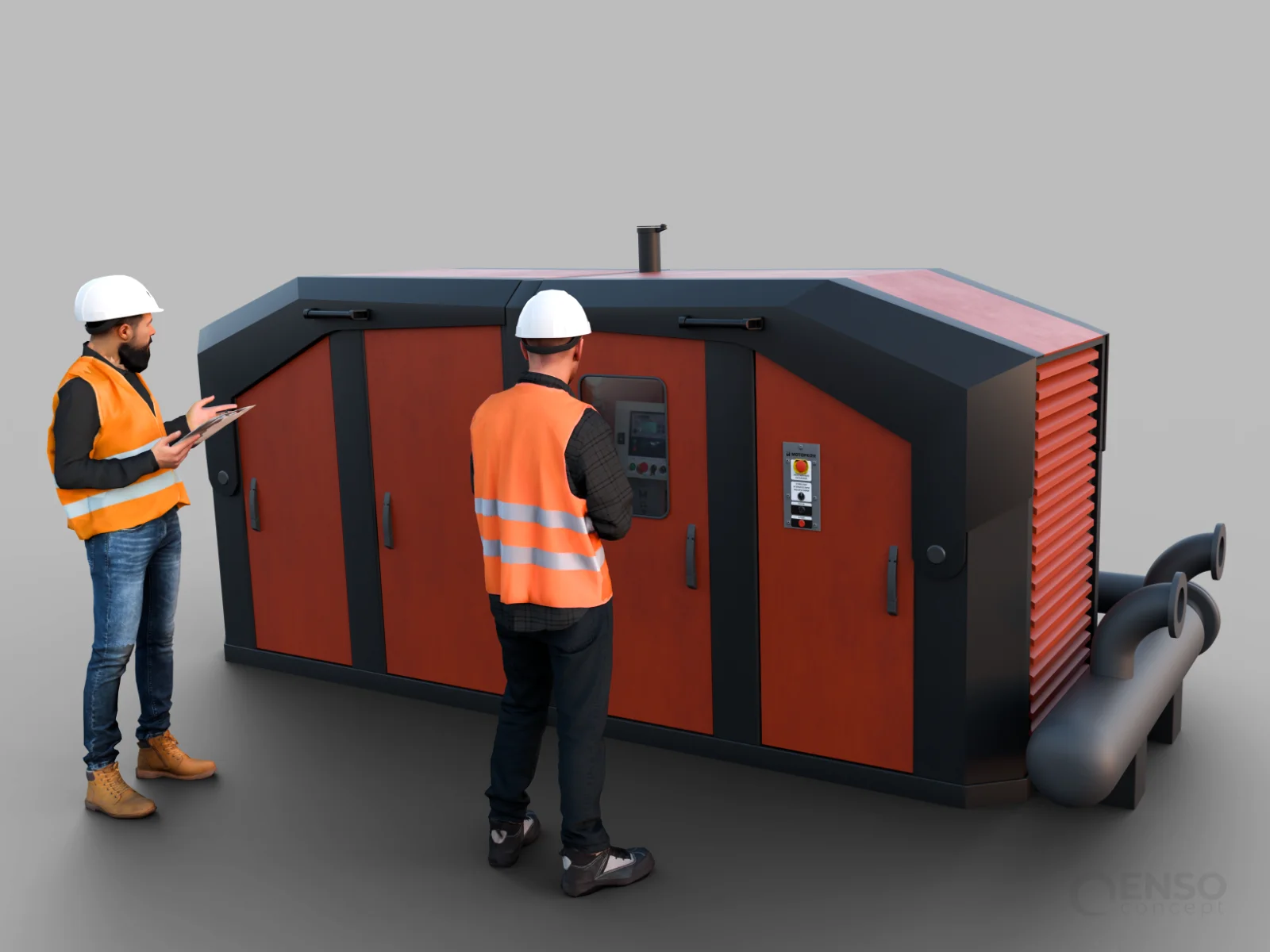
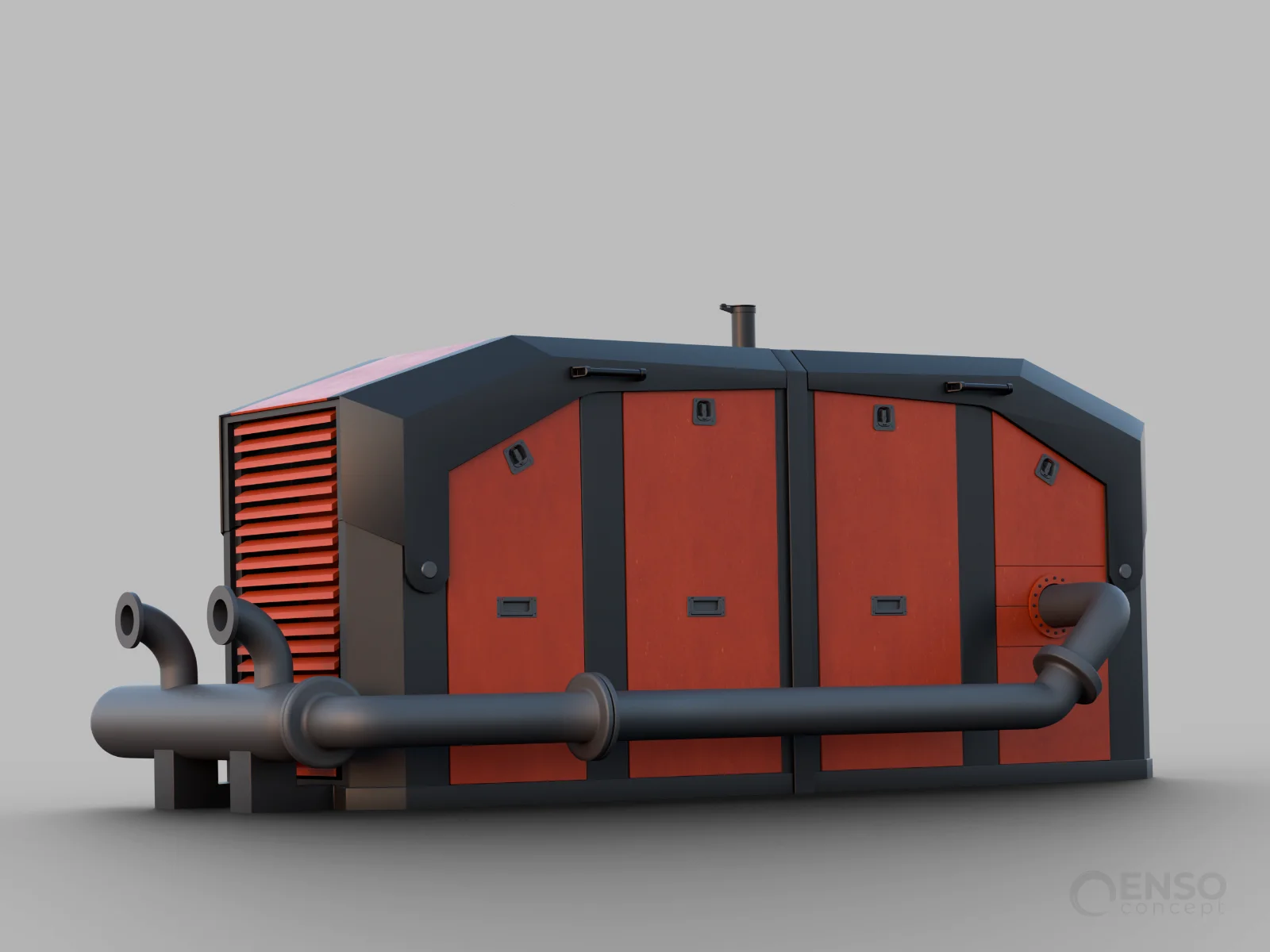
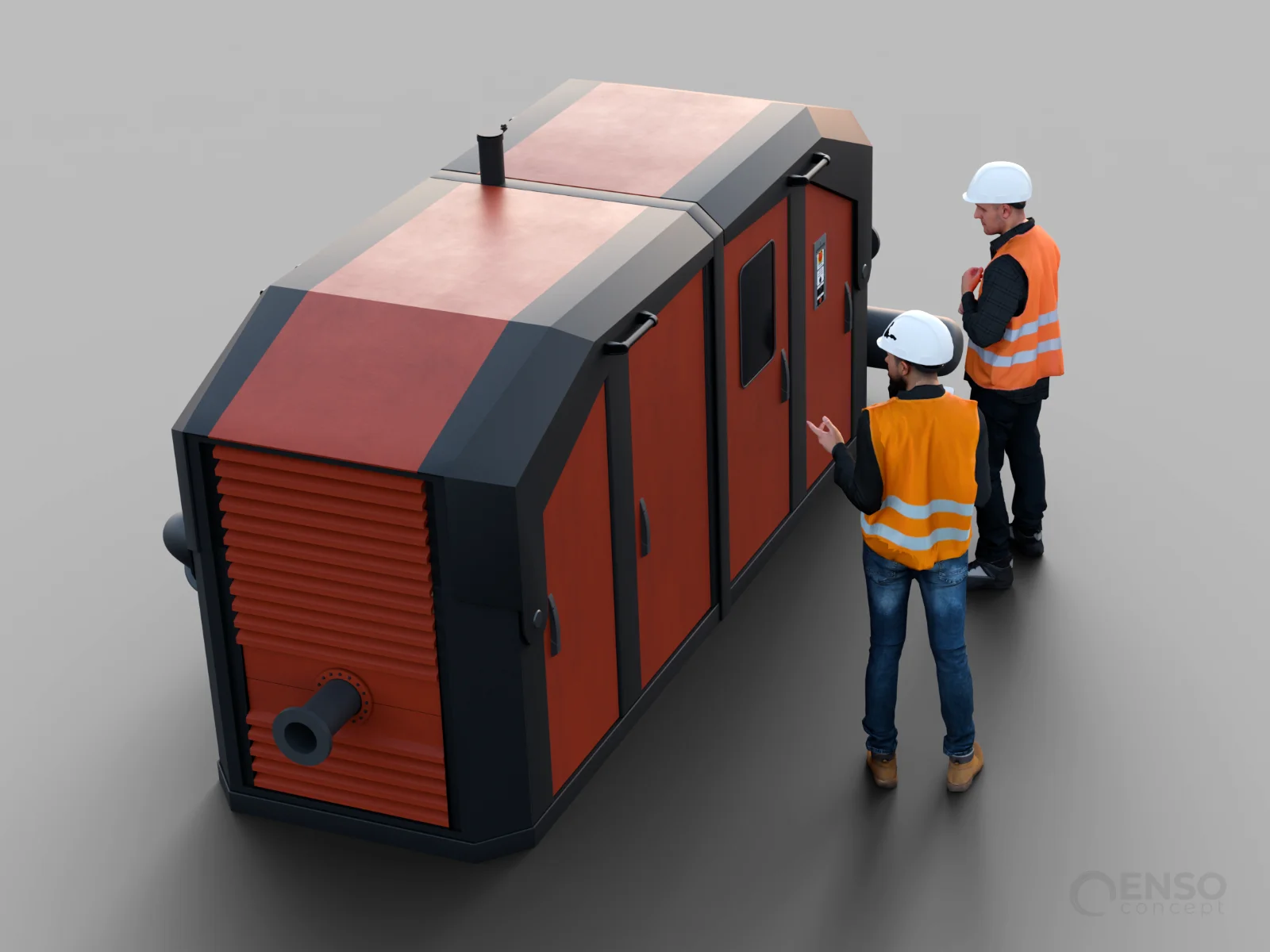
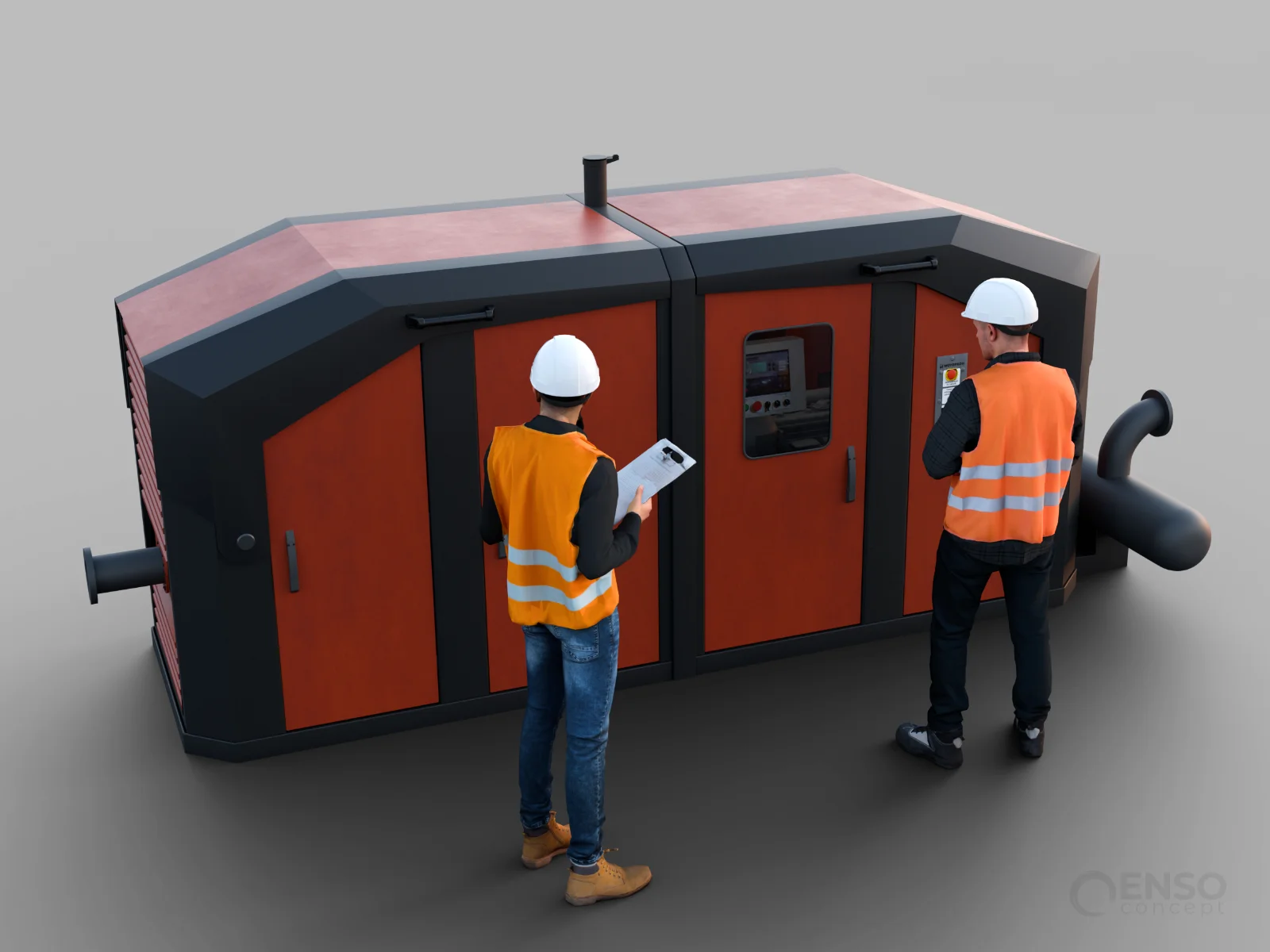
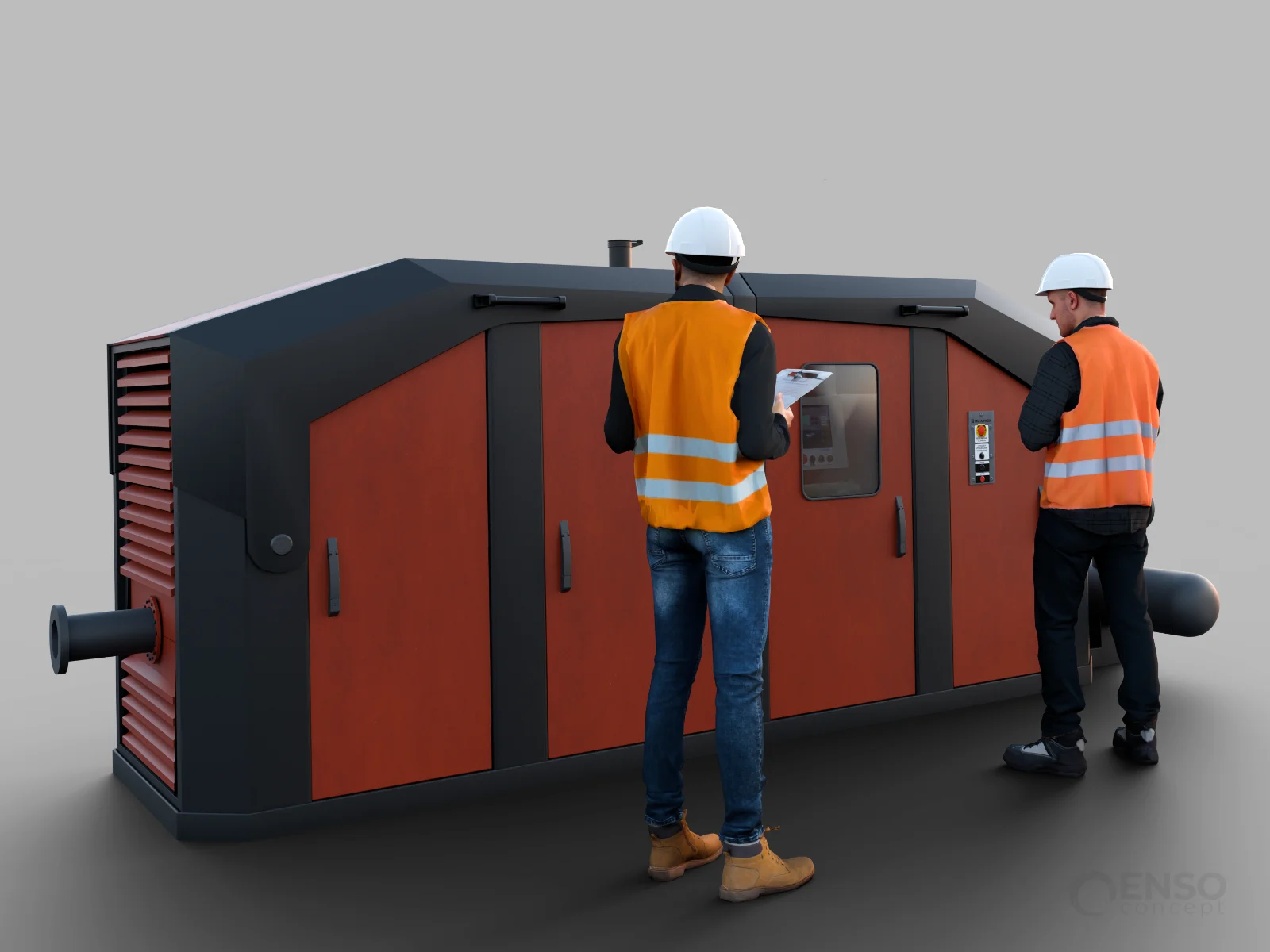
We moved away from the idea of a sealed outer shell and designed the enclosure as a structure that opens up around the equipment. Its permanent frame creates the main structural outline and a coherent heavy-duty appearance, while access is provided through separate top covers, hinged doors, removable panels and interchangeable infill sections.
We designed the enclosure around the way the pump is actually serviced — not the other way around
Rather than designing a shape first and fitting the machinery inside it, we built the enclosure around real operating and maintenance scenarios. The pump dimensions, service points, ventilation requirements and pipe routes were already fixed, so the industrial design had to work within that engineering framework.
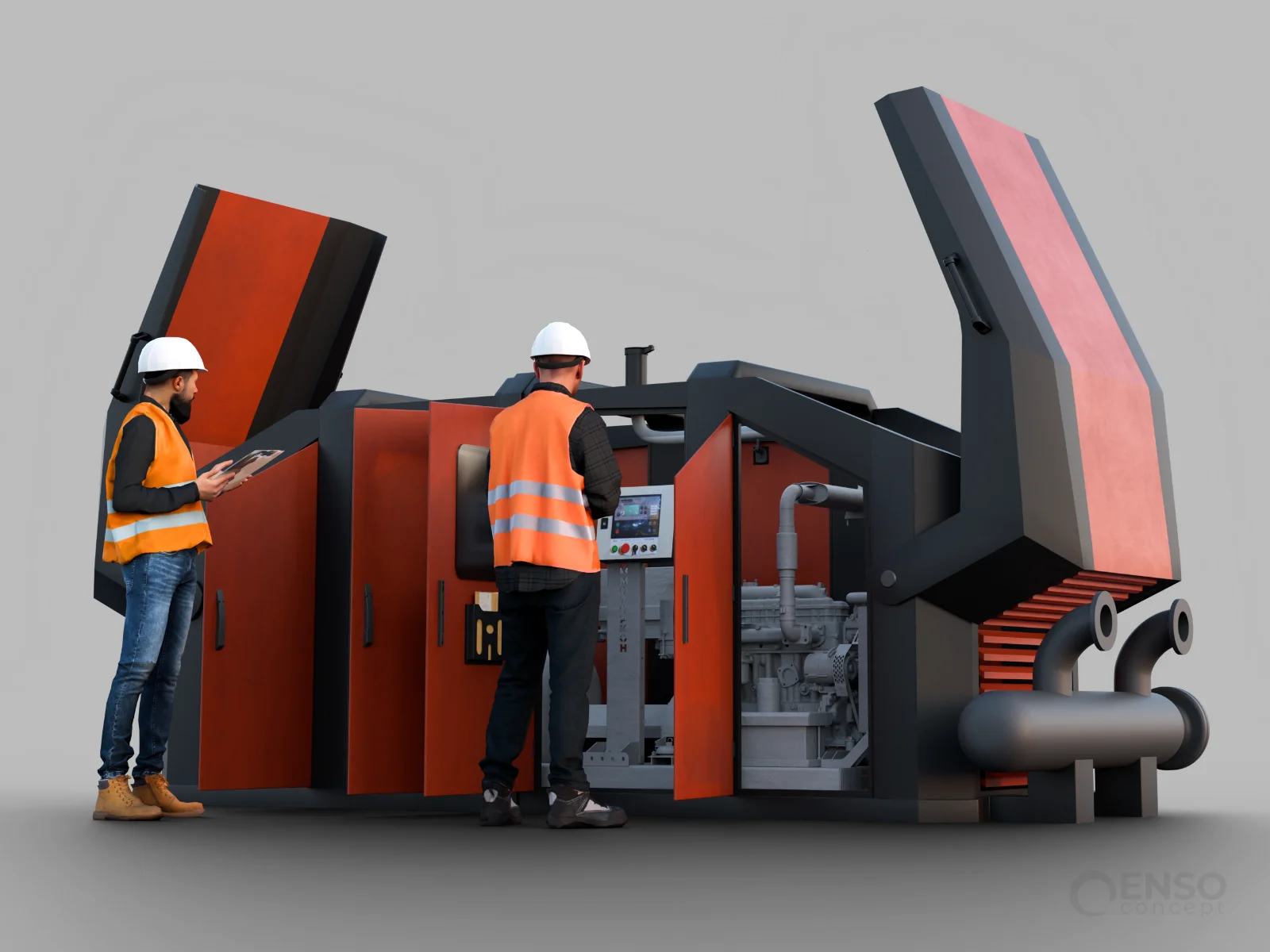
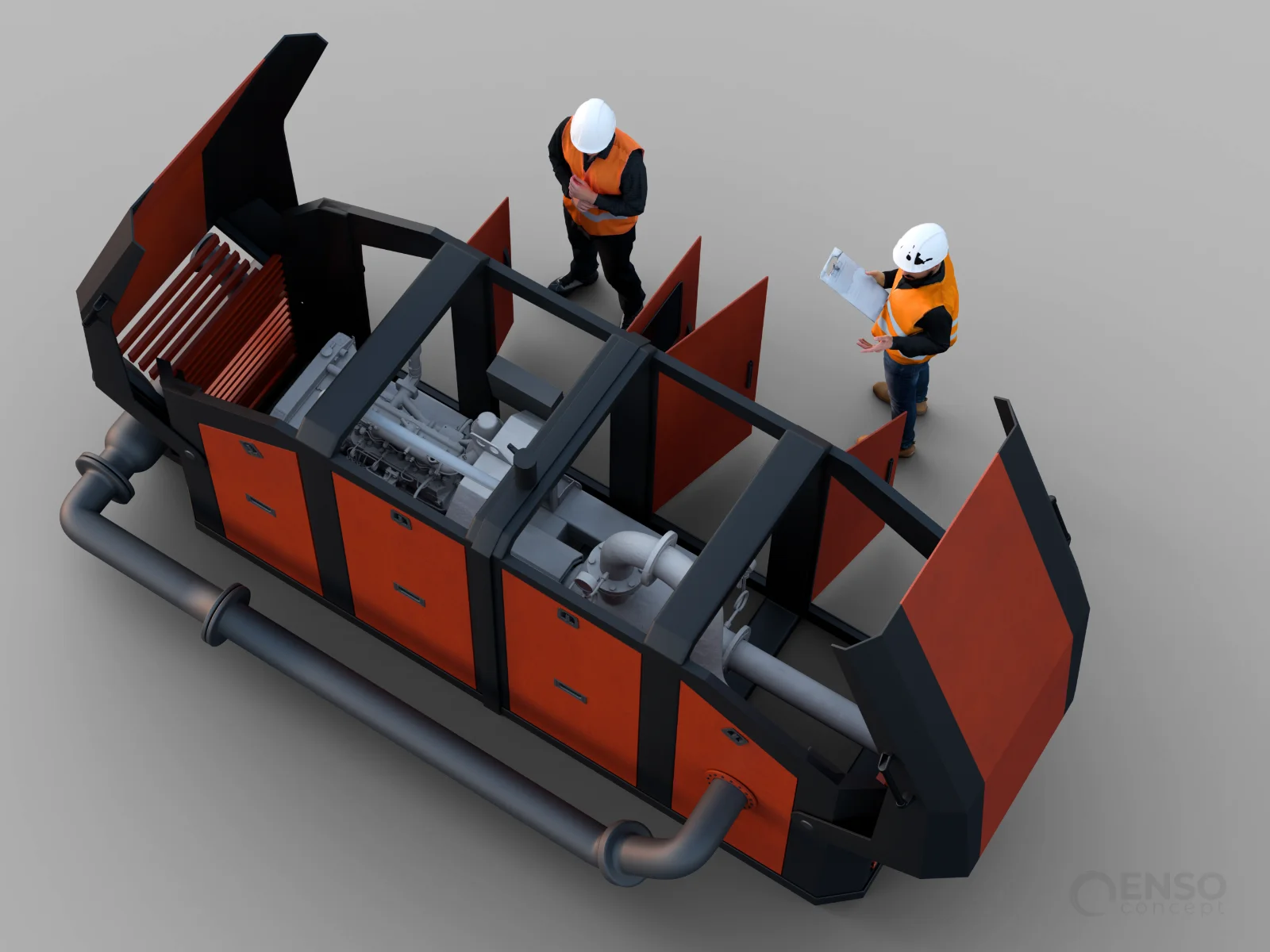
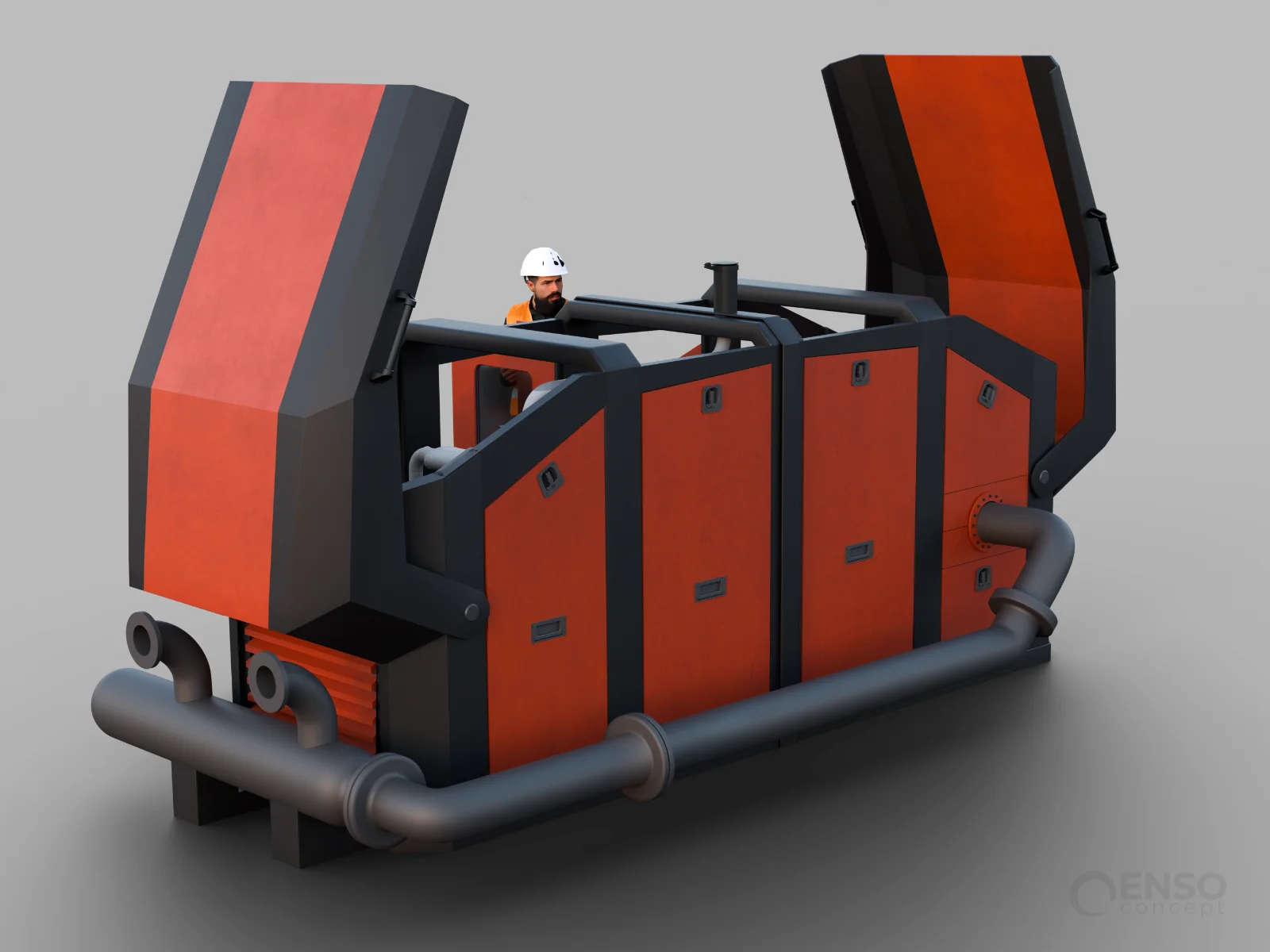
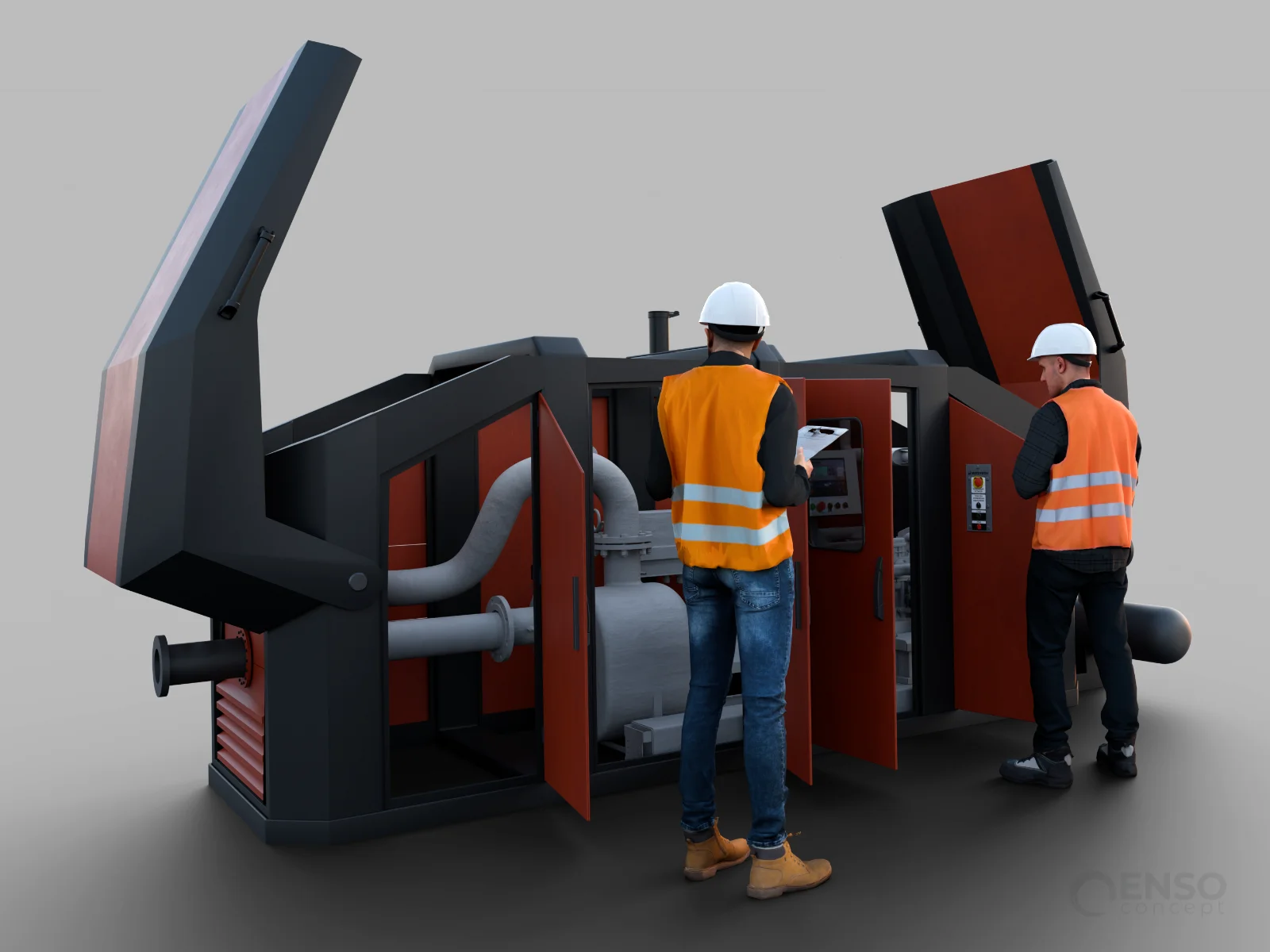
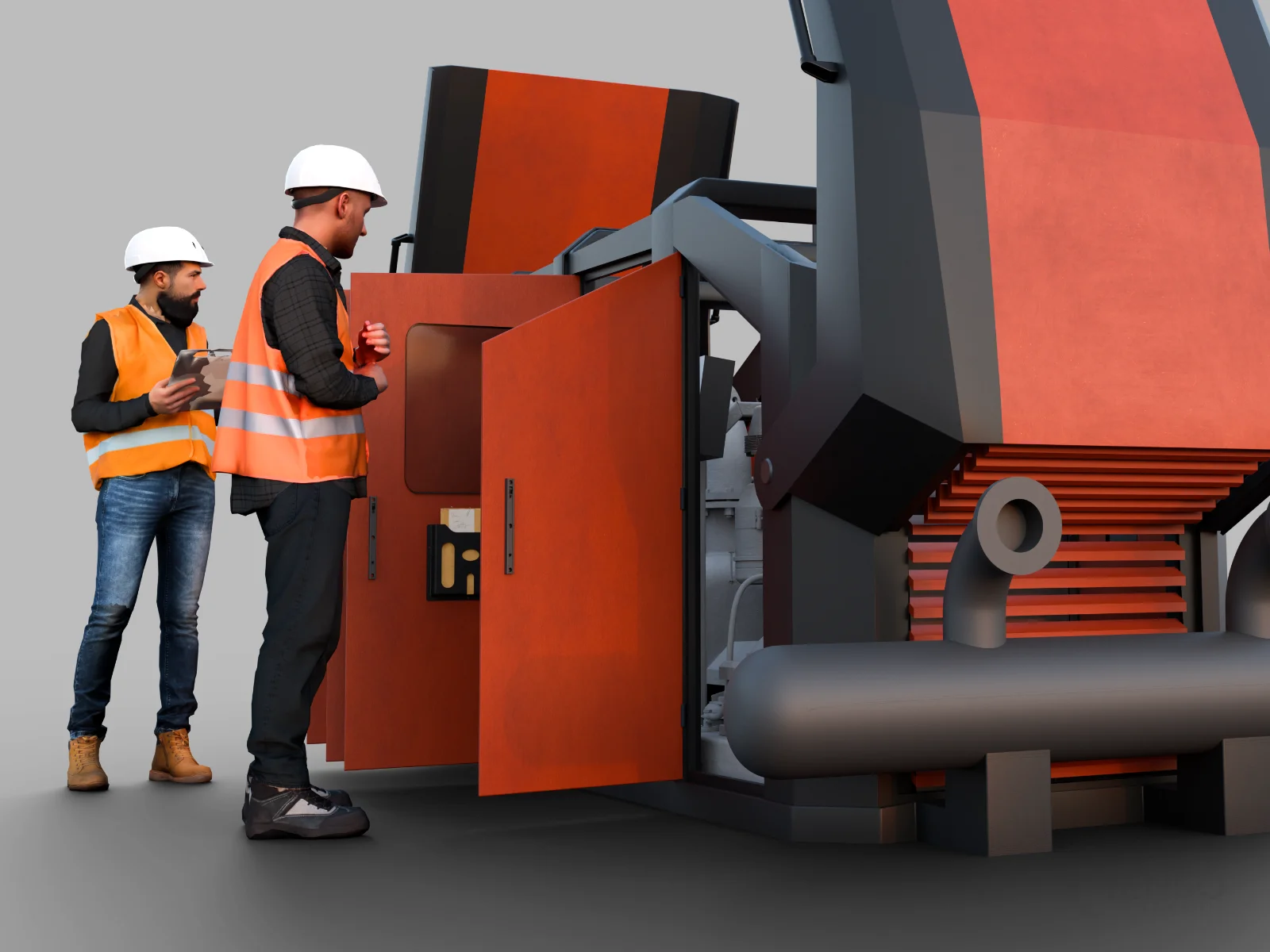
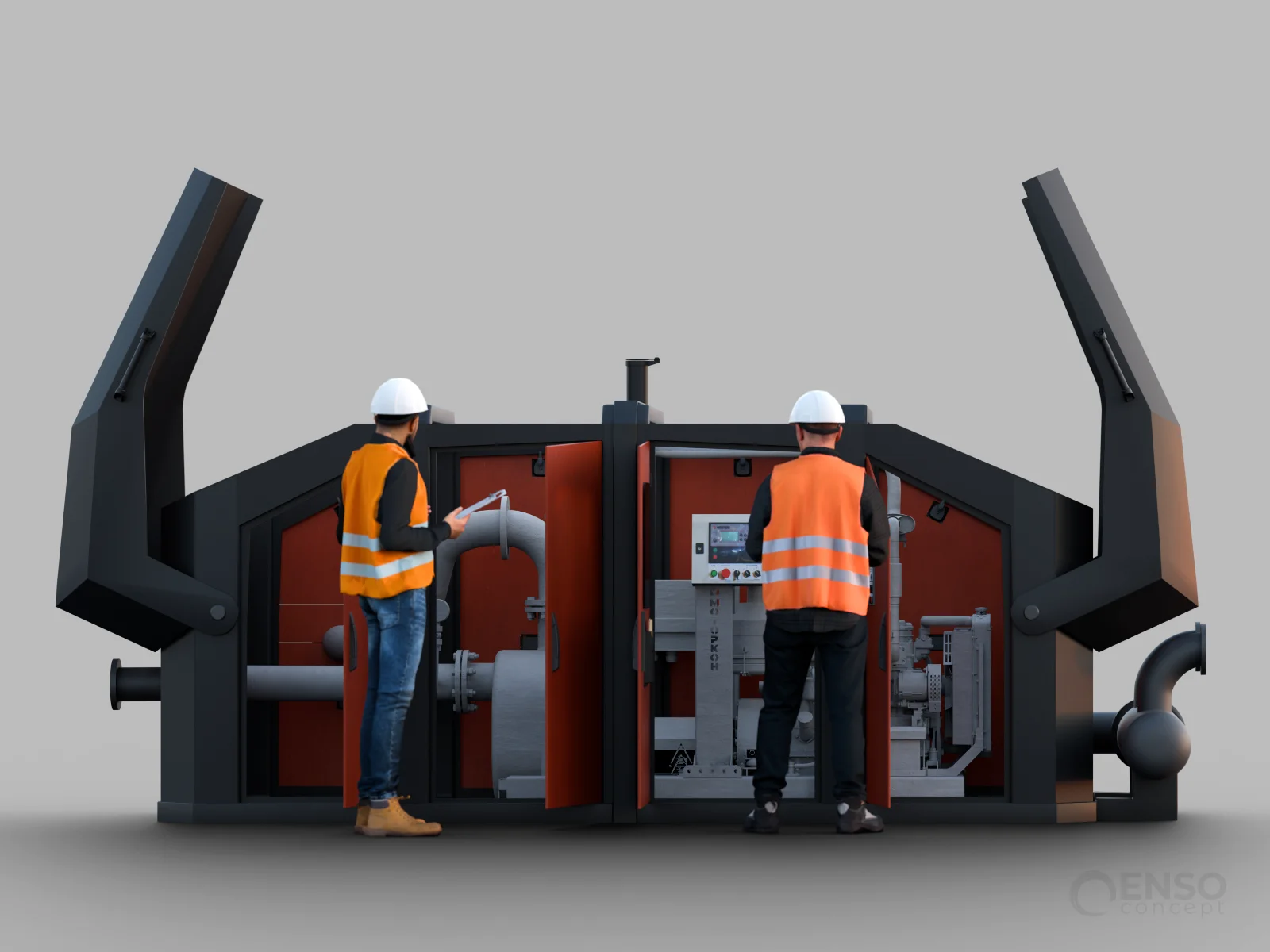
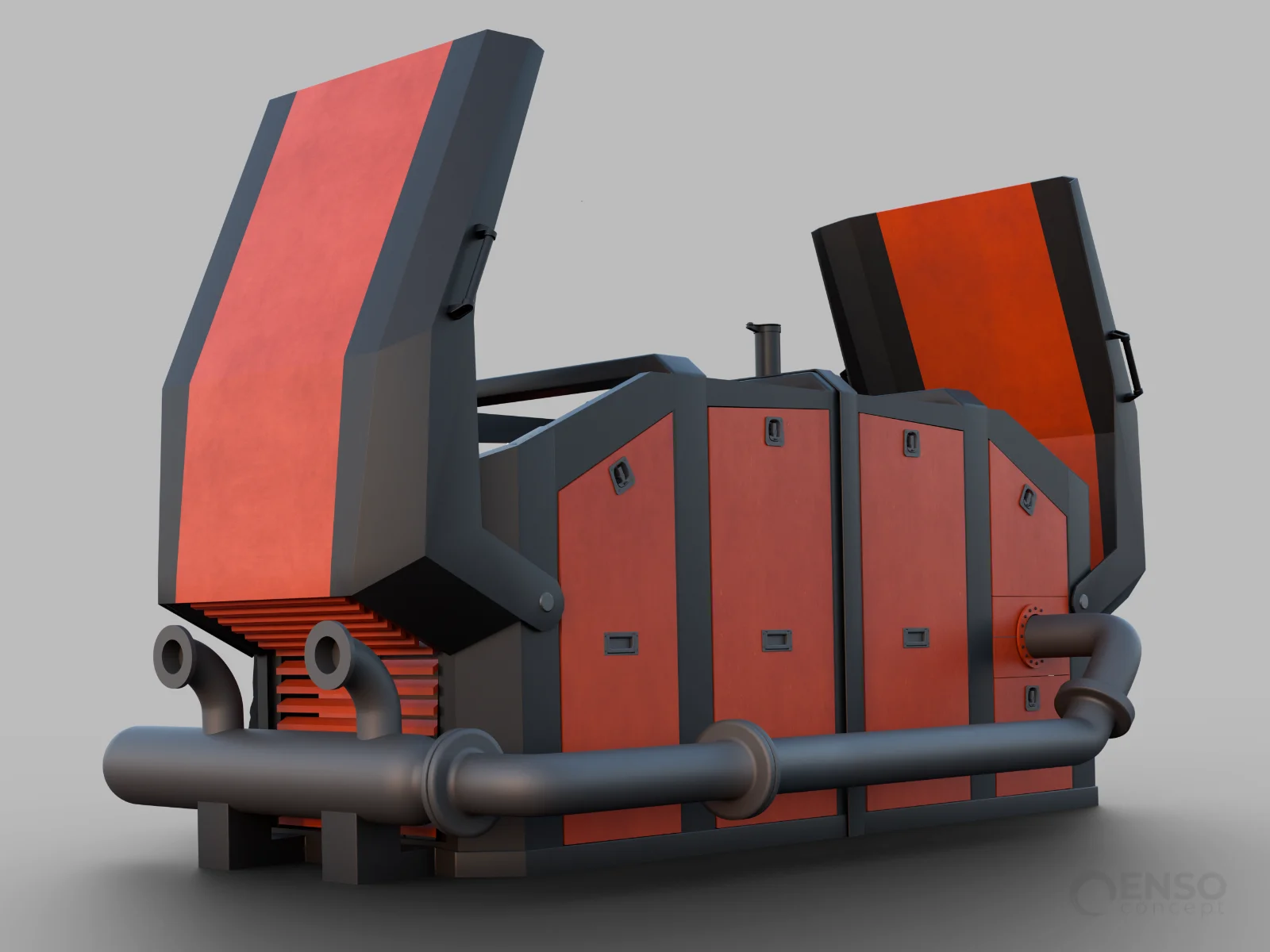
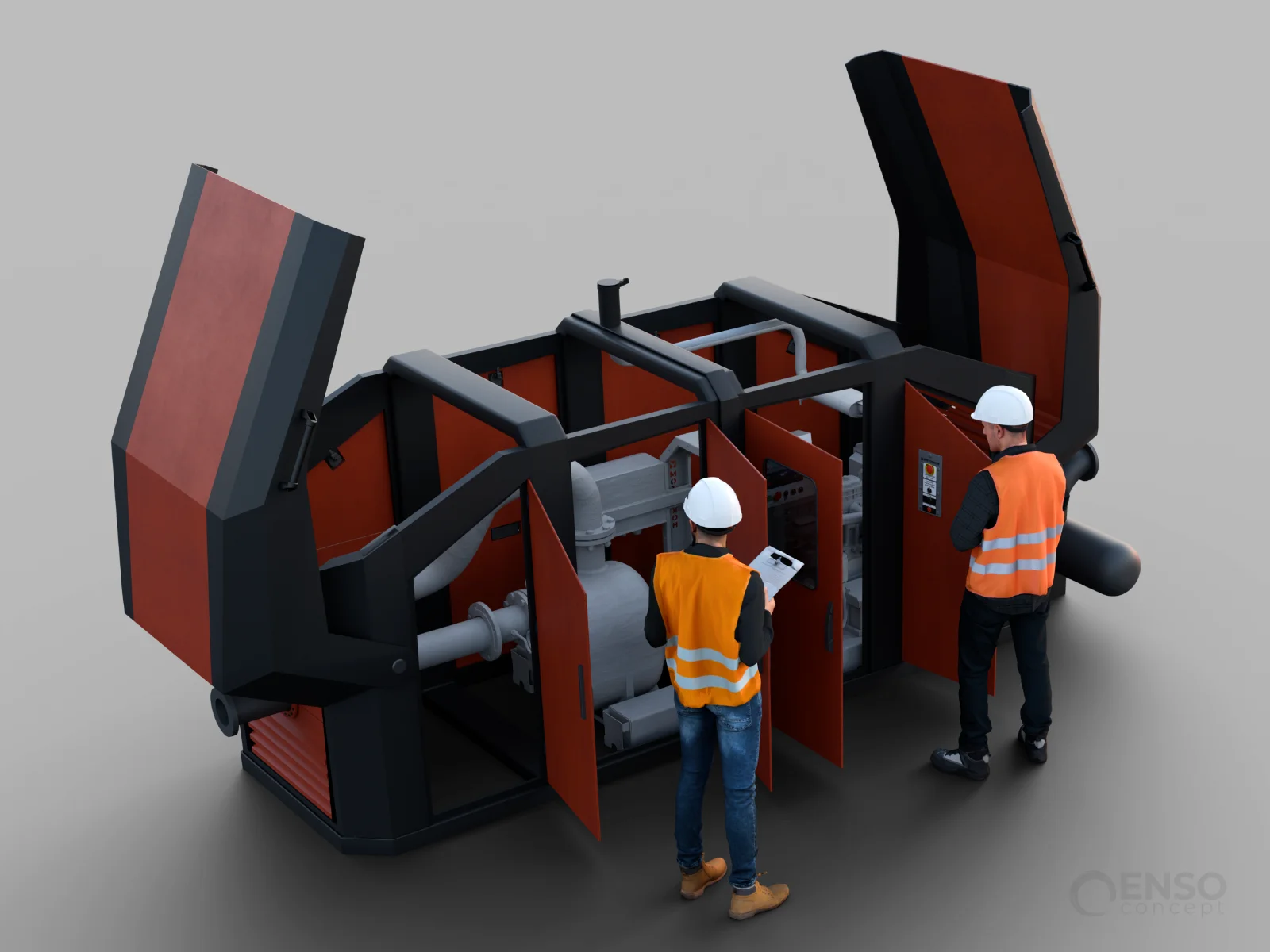
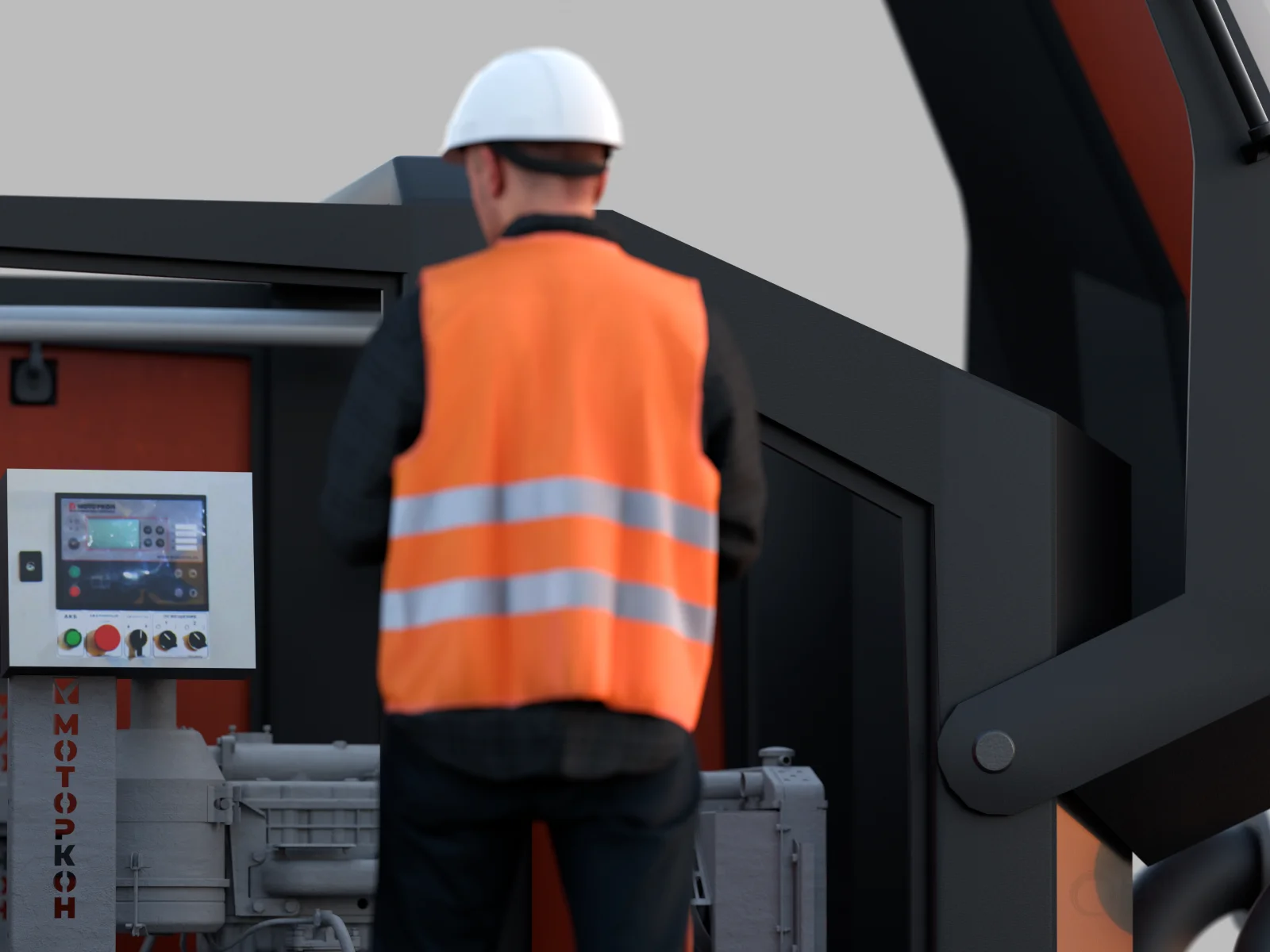
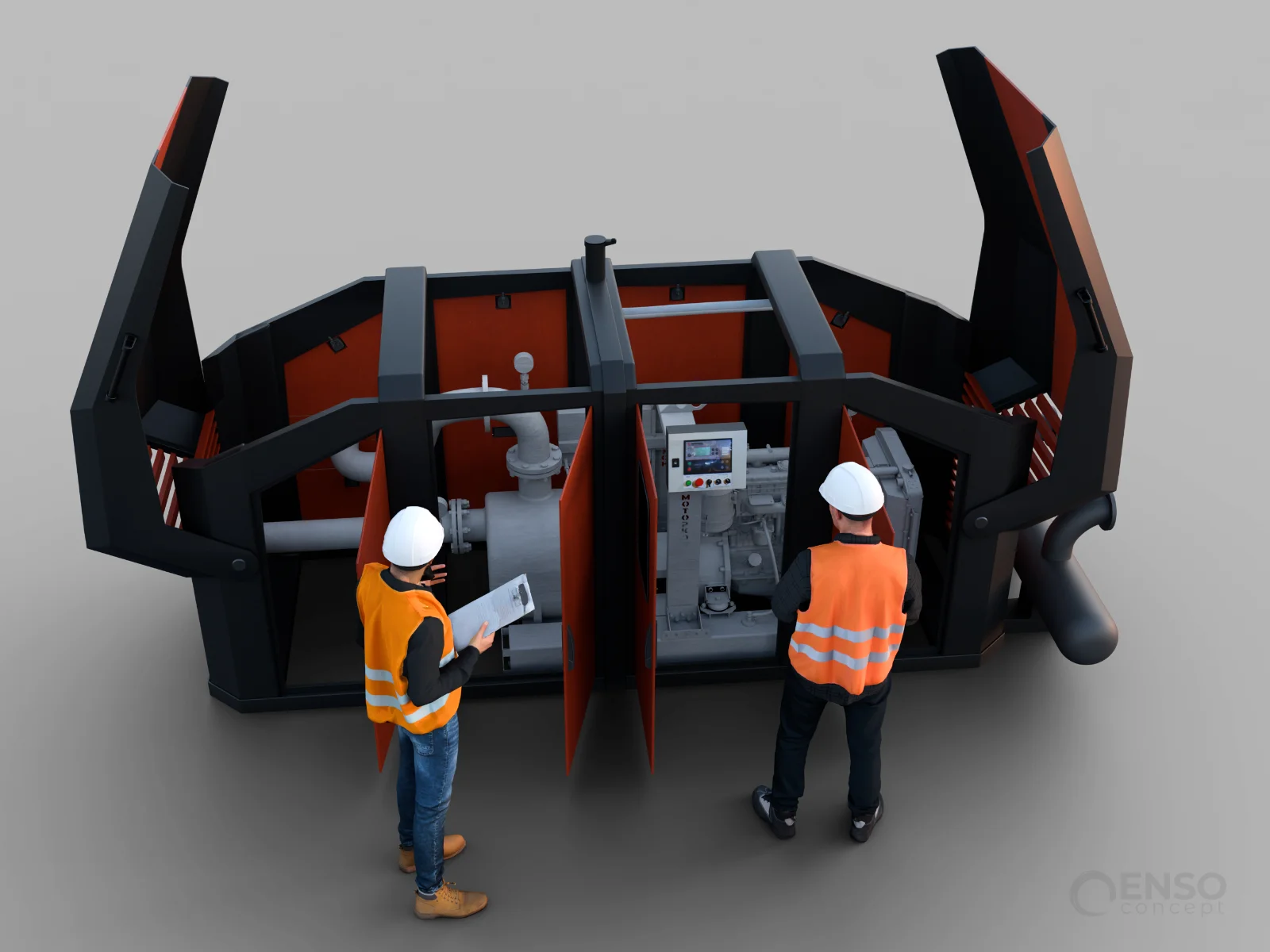
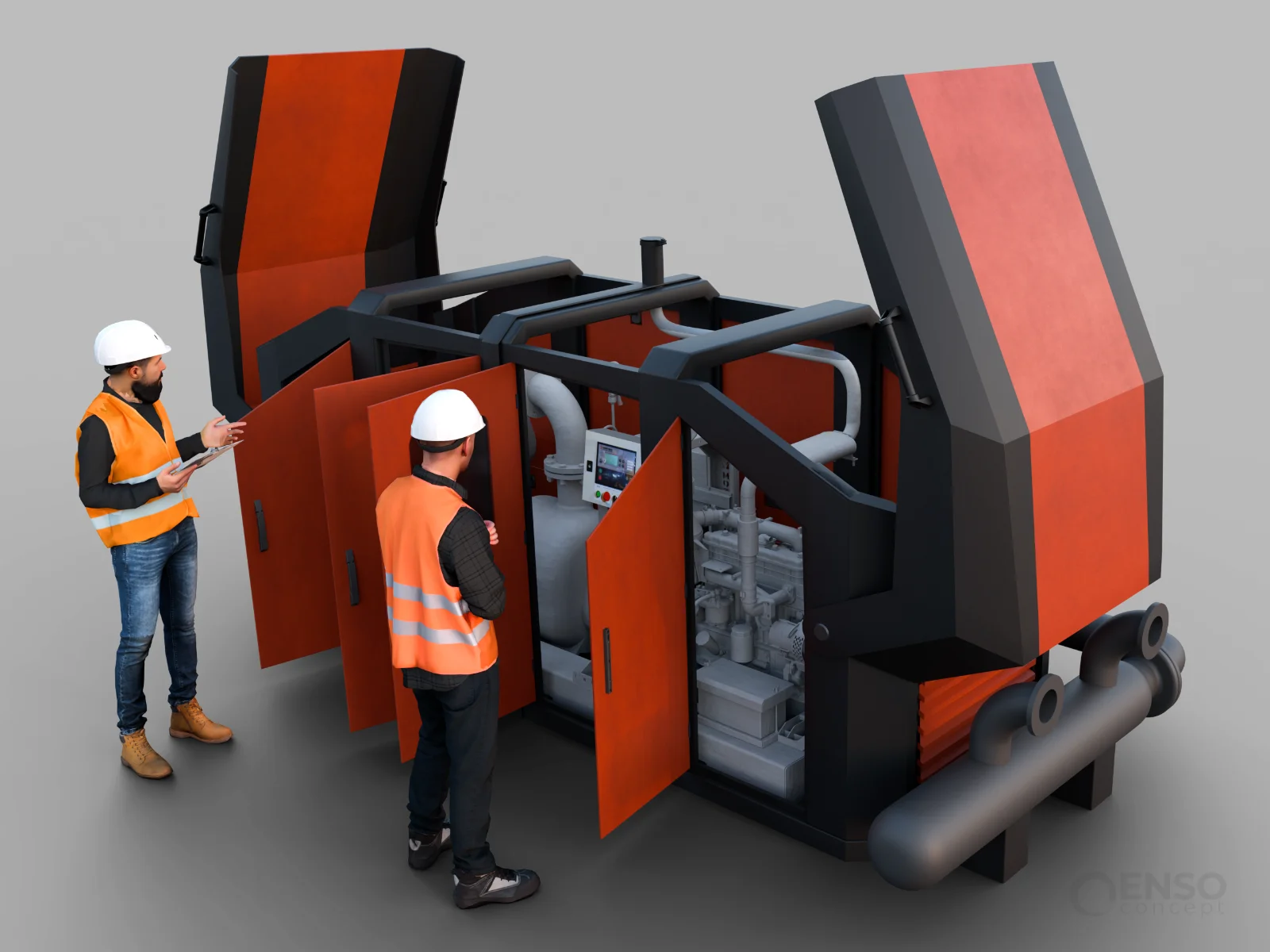
The upper covers open up a large service area above the pump. This gives technicians access from the top and, when required, allows individual components to be lifted out with a hoist without removing the entire enclosure. This was an important principle for us: the enclosure itself should never become another obstacle between the technician and the machine.
The geometry and motion of the covers were therefore driven by more than appearance alone. We had to account for the pipework, the central structural beam and the actual working space around the unit. When open, the covers stay clear of the pipes; when closed, they bring the enclosure back together into a single protected volume.

For more extensive maintenance, the enclosure can be opened even further. The cross-members of the structural frame are removable, so a technician can gain direct access to couplings, shafts and flanges, or remove larger components when necessary.
The rest of the frame remains in place and retains the overall geometry of the enclosure. In other words, the opening system is not a styling gesture — the structure itself was designed around how the pump will actually be serviced.
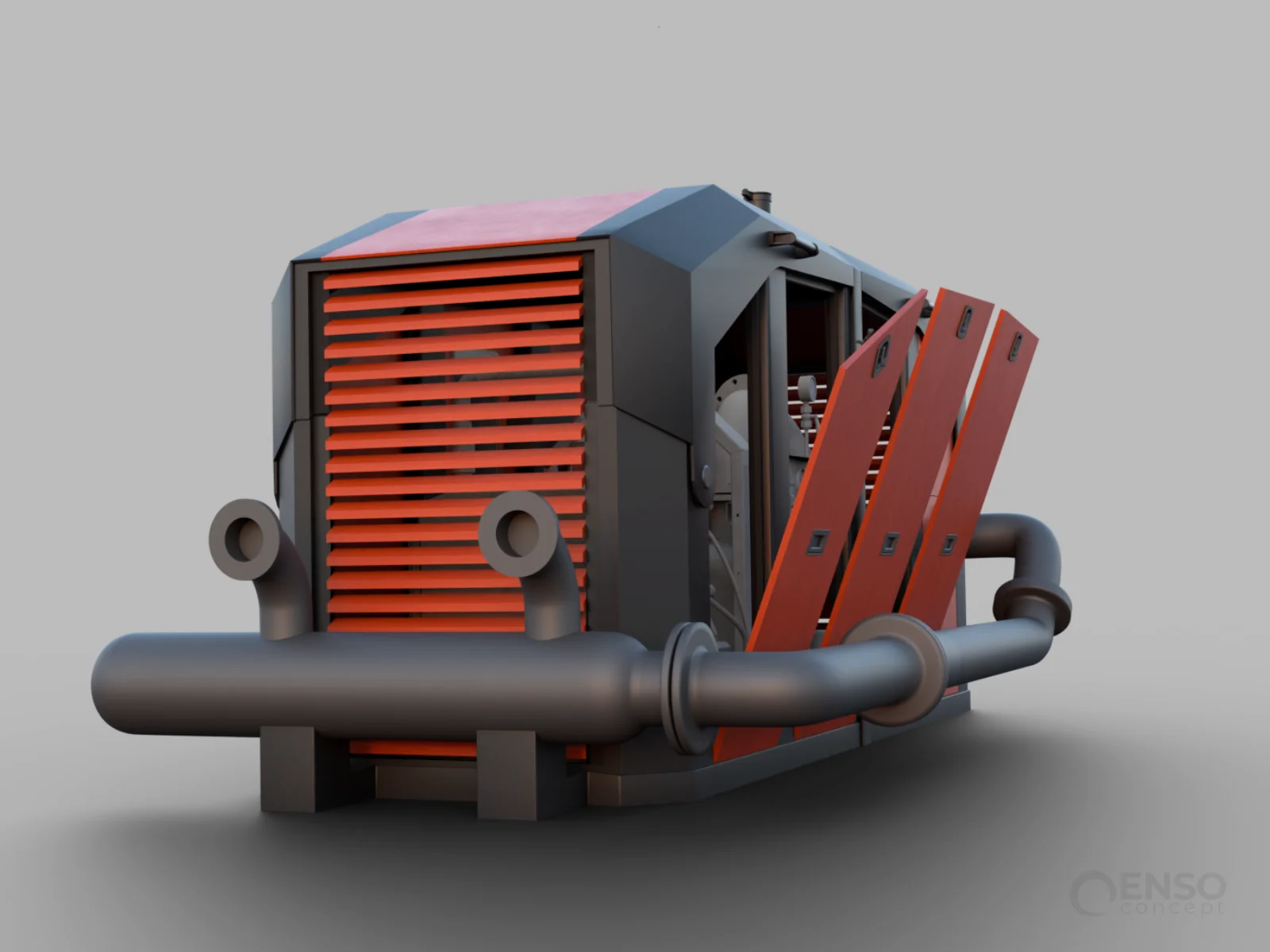
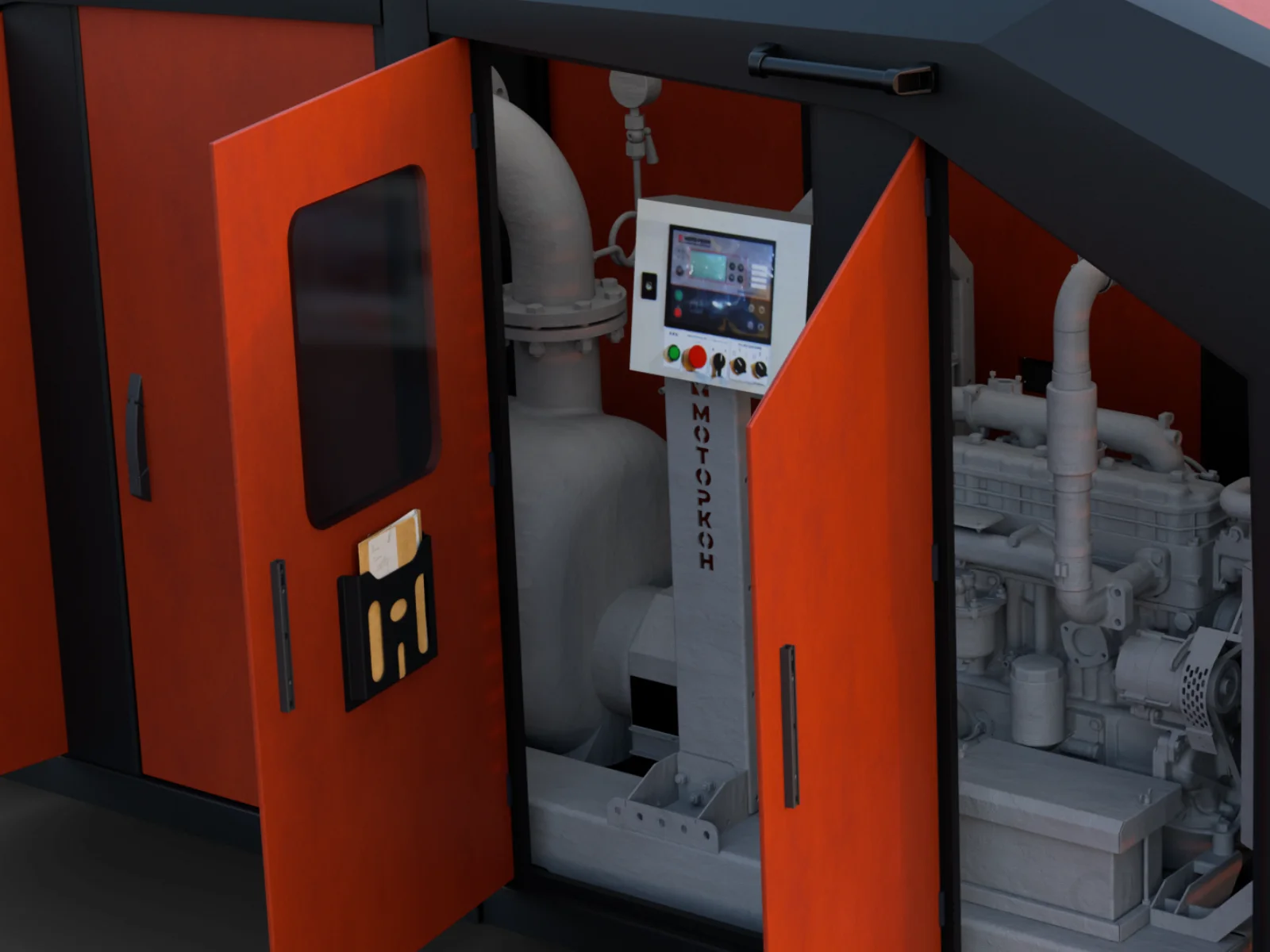
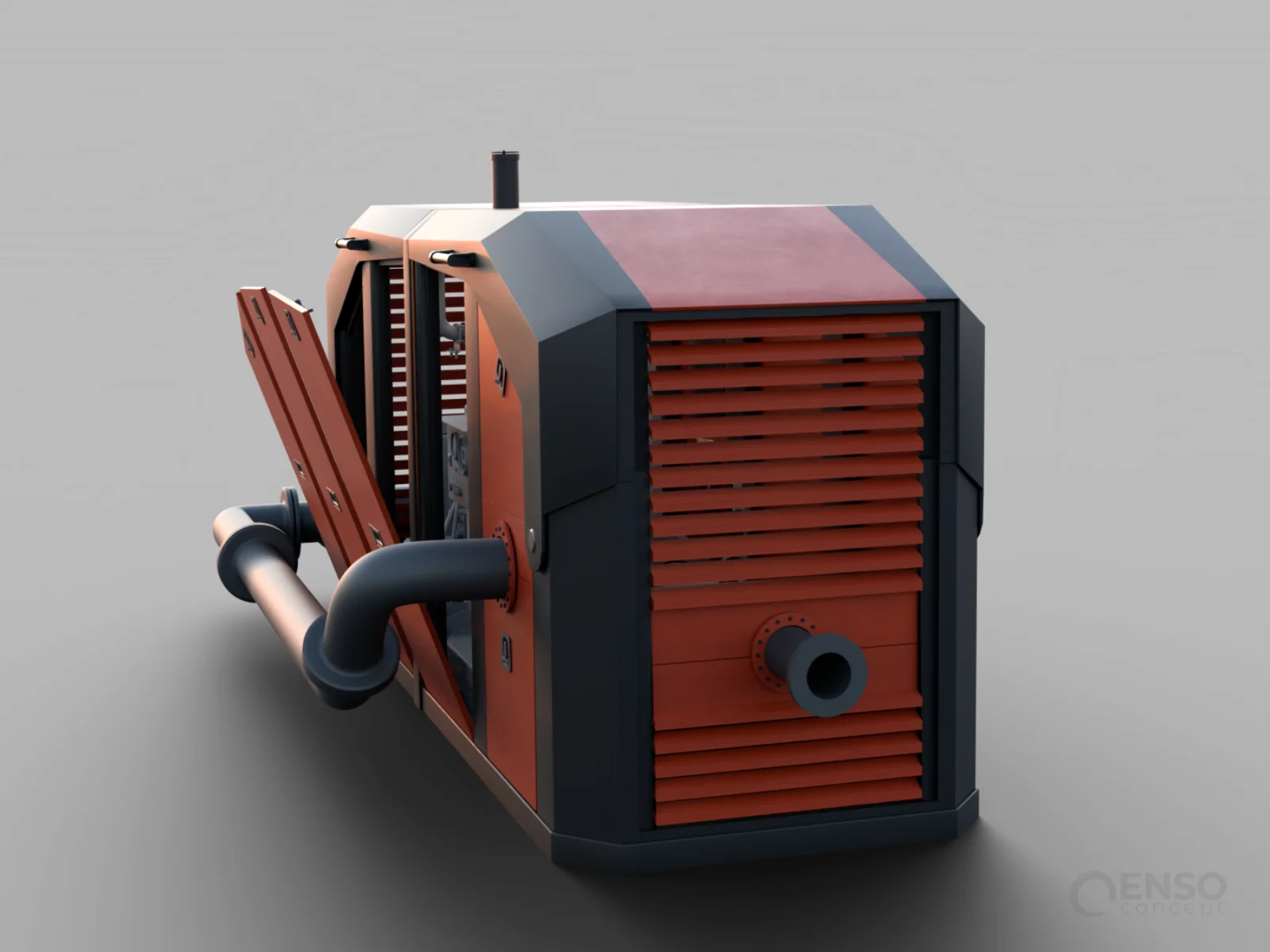
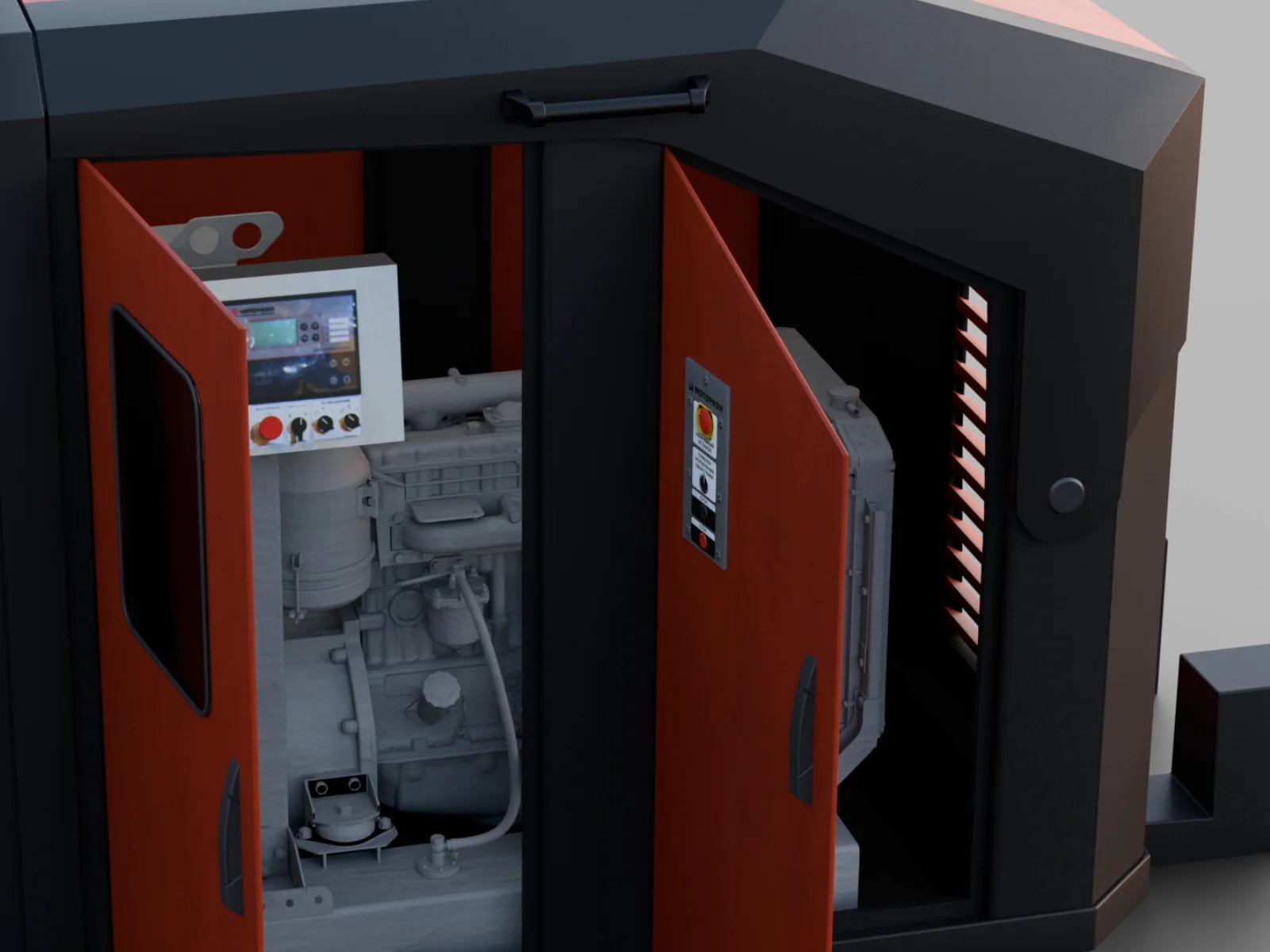
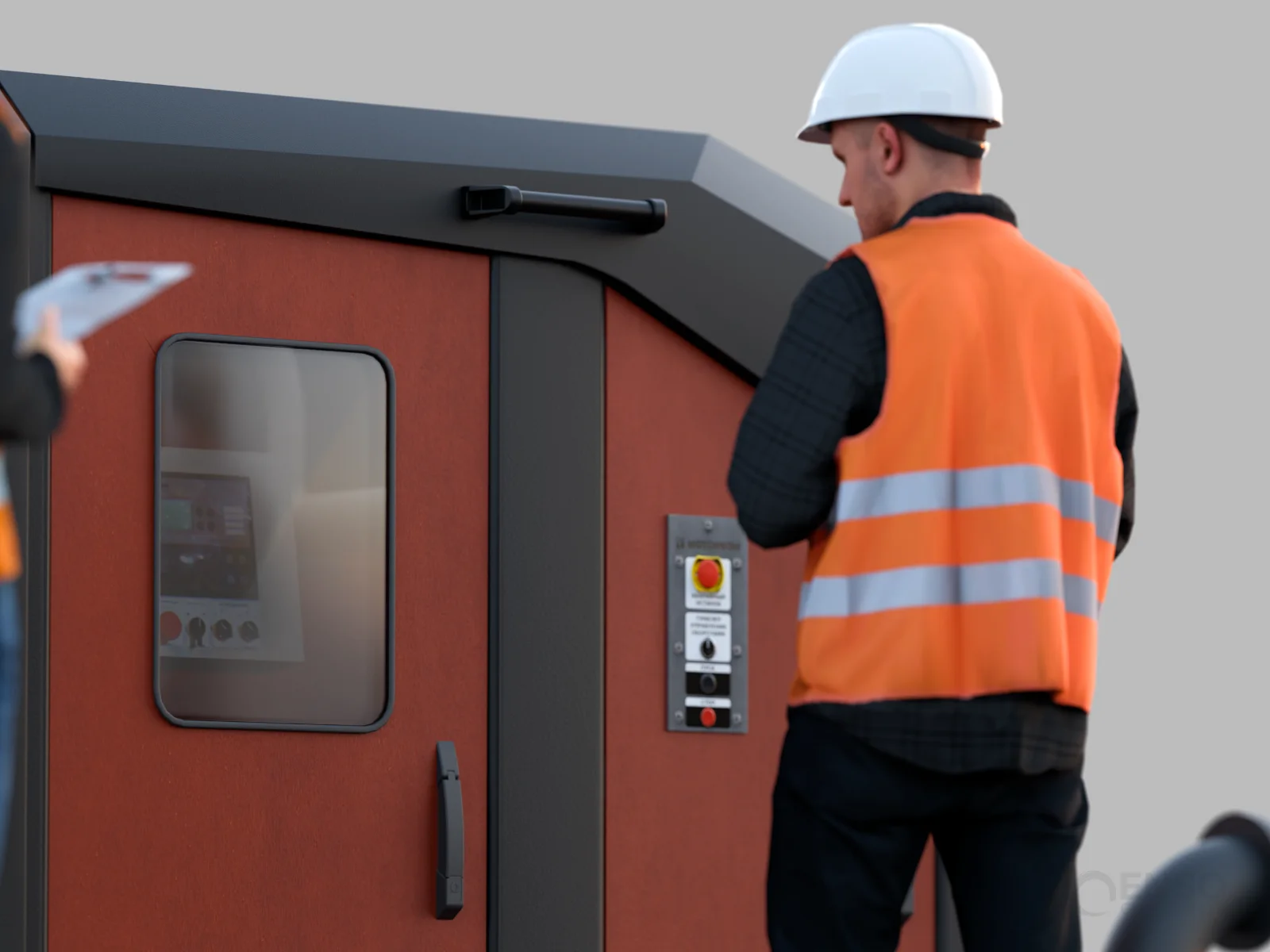
The side openings were divided according to how they are used. Full hinged doors are used where frequent access to the controls, drive system and key service points is required. But industrial equipment is often installed where there is not enough space to swing a large door open. In tighter areas we therefore use removable panels: release the latches, remove the panel completely, and nothing is left projecting into the technician’s working space.
Both approaches follow the same logic of openings, seals and compression or draw latches, so different access methods still feel like parts of one coherent enclosure rather than a collection of unrelated solutions.
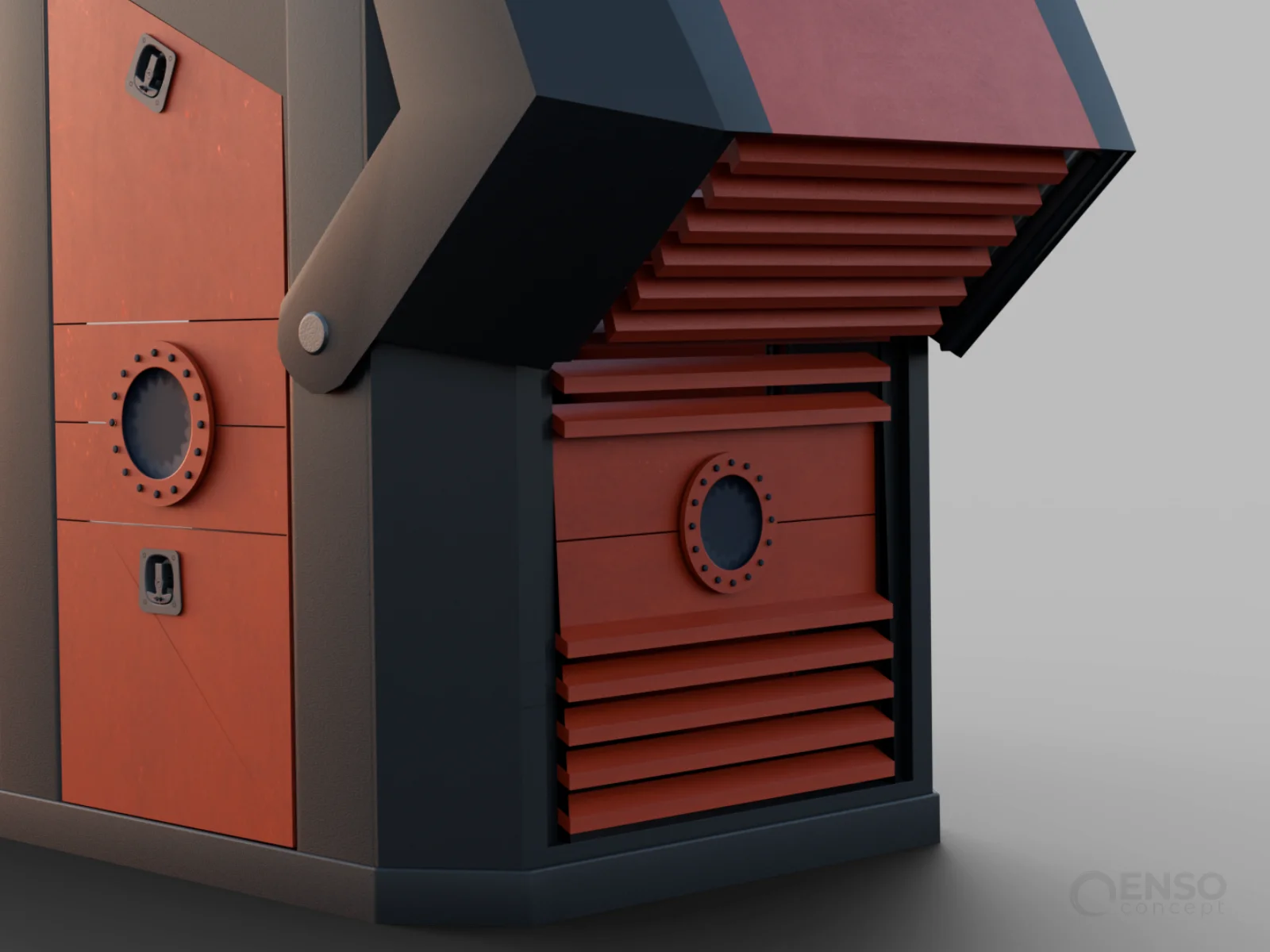
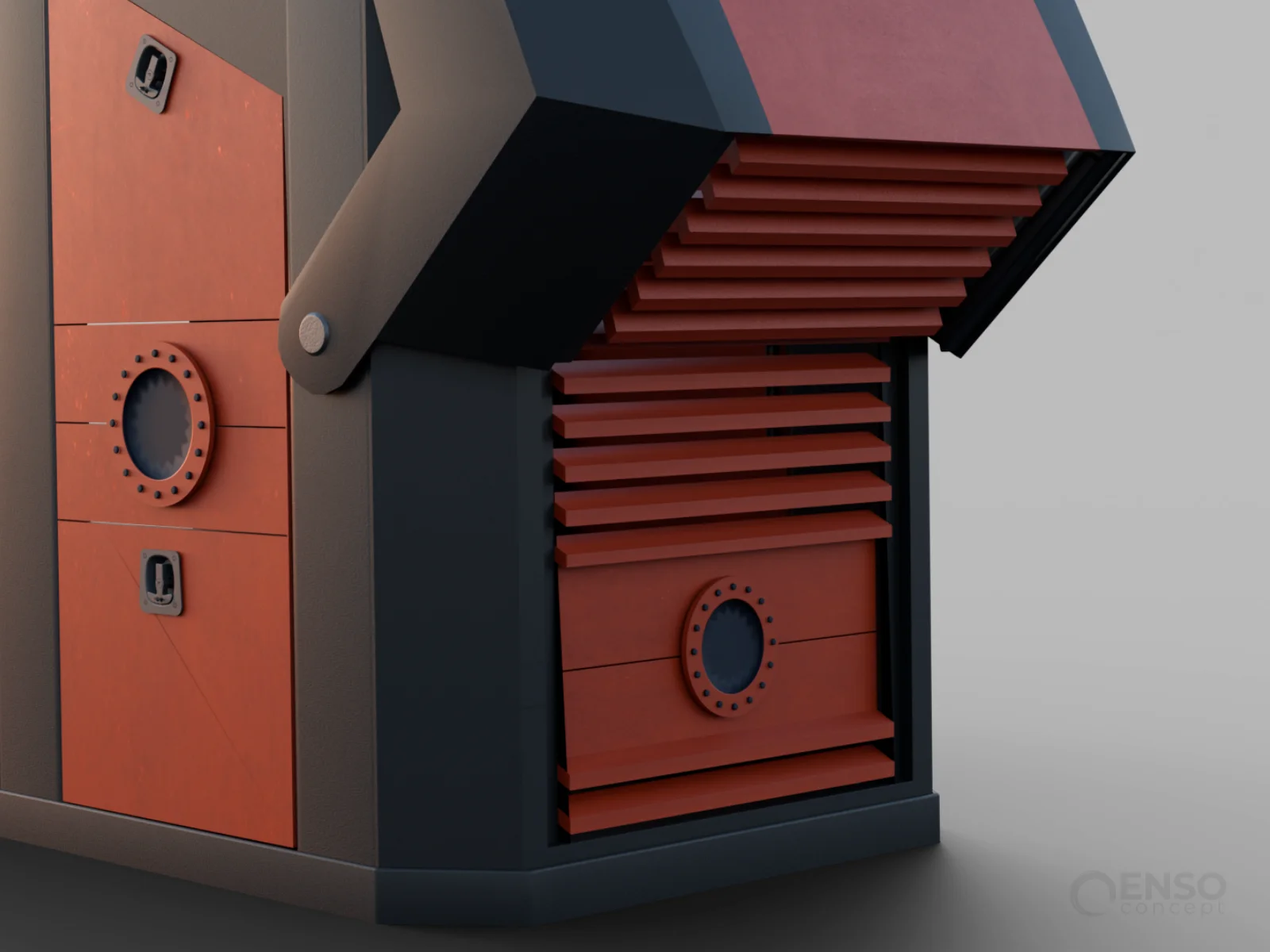
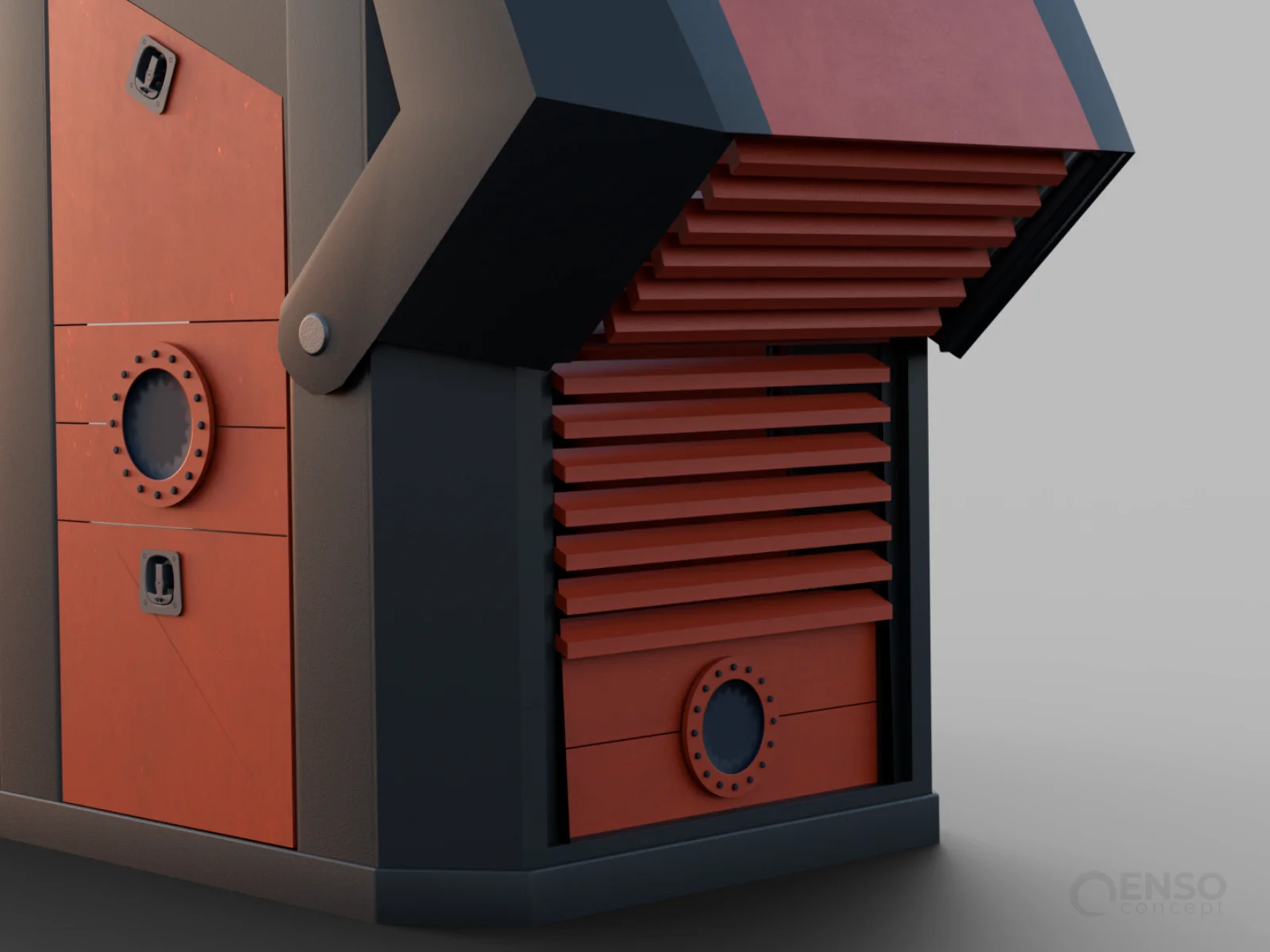
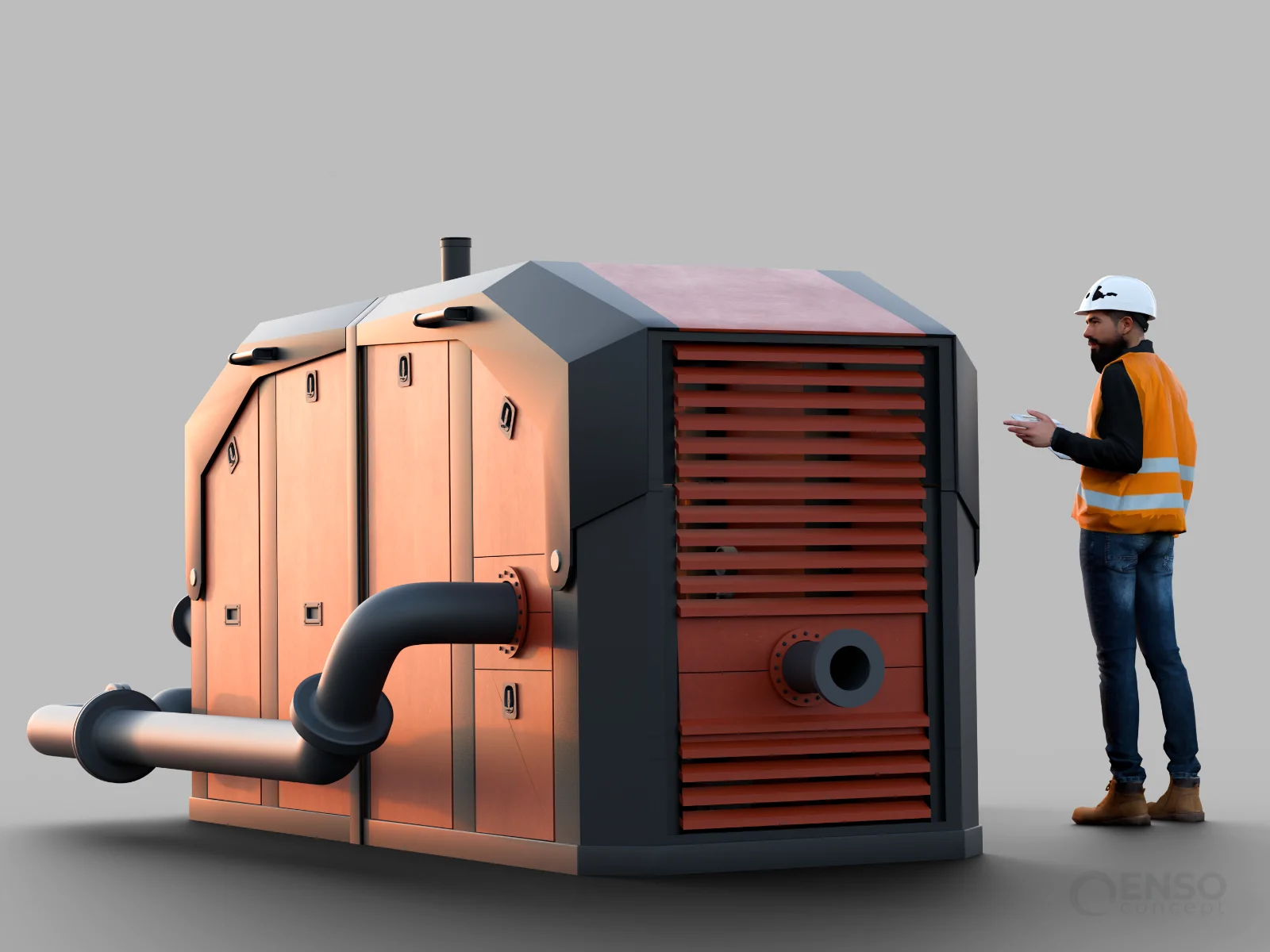
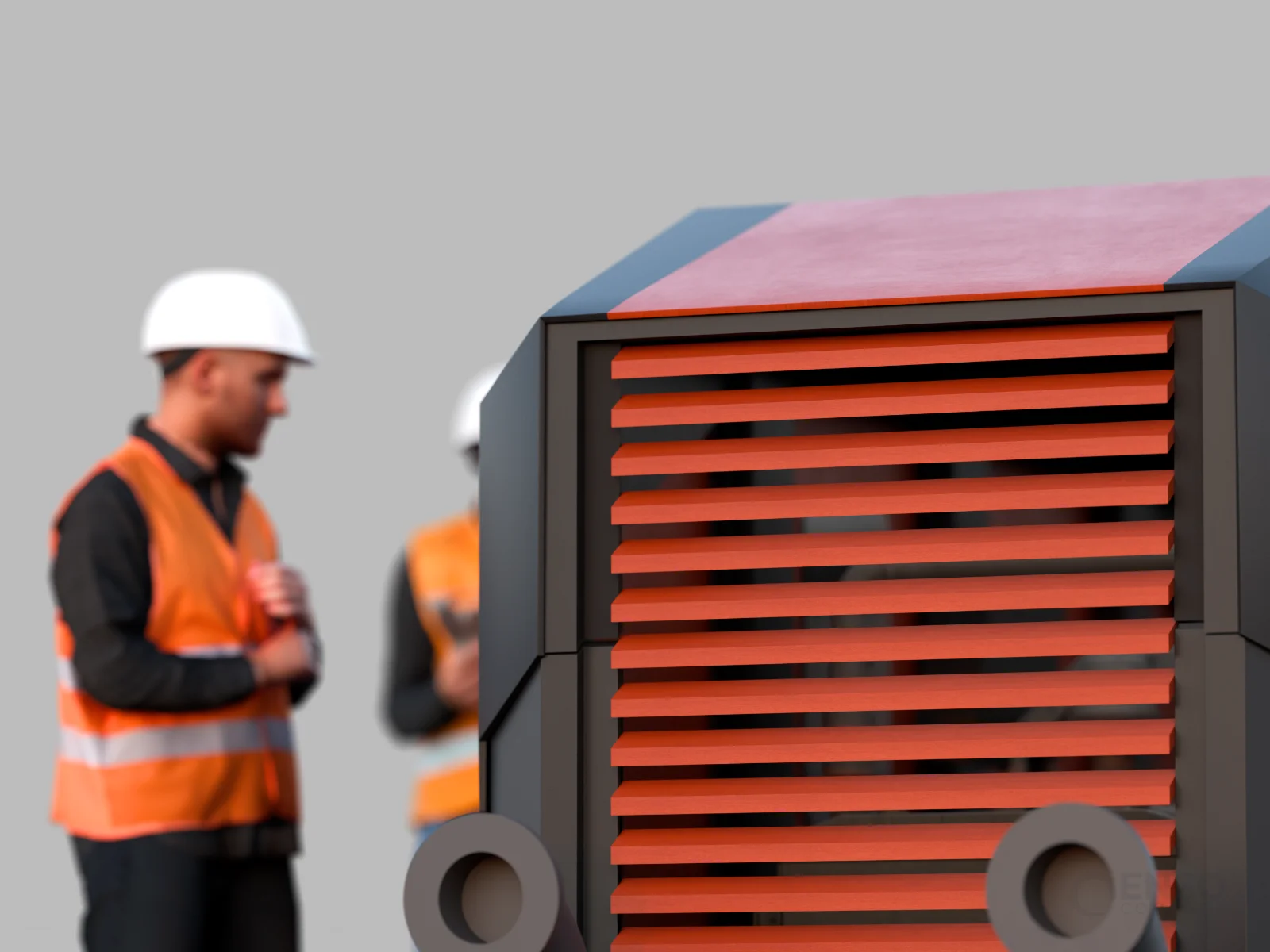
The end sections required a different approach because this is where the main pipework passes through the enclosure. Pipe diameter and routing can vary from one installation to another, so designing a completely new enclosure for every project would make little sense.
We retained the portal-type structure of the original engineering concept and made it a permanent part of the product architecture. The structural section and ventilation elements remain standard, while only the infill panels and the height of the pipe openings change for a specific installation.
This means the same enclosure architecture can be adapted to different pump layouts without redesigning the entire product.
Result:
The result is more than an outer shell. It is a service-oriented enclosure designed as an integral part of the industrial unit. In normal operation, it brings the motor, pump, controls and pipework together into one protected and visually coherent product. During maintenance, the enclosure opens exactly where access is needed: the top covers provide access from above, hinged doors serve frequently maintained areas, removable panels free up tight spaces, and interchangeable infill sections accommodate different pipe layouts. For major service operations, even parts of the structural frame can be removed.
We also tried not to introduce complexity for its own sake. Wherever an existing engineering solution already worked well — such as the portal structure at the ends — we kept it and developed it further. New elements were added only where they solved a real operational problem.
And perhaps the main takeaway from the project is this: the form did not emerge despite the constraints of industrial equipment, but because of them. Service access, pipework, ventilation and maintenance scenarios were not obstacles to the design — they became the inputs that shaped the architecture of the enclosure.