

Coat Hanger Attachment for Office Chair
A focused design study developed within the constraints of an existing product.
An example of how functionality can be extended without disrupting the original design language.
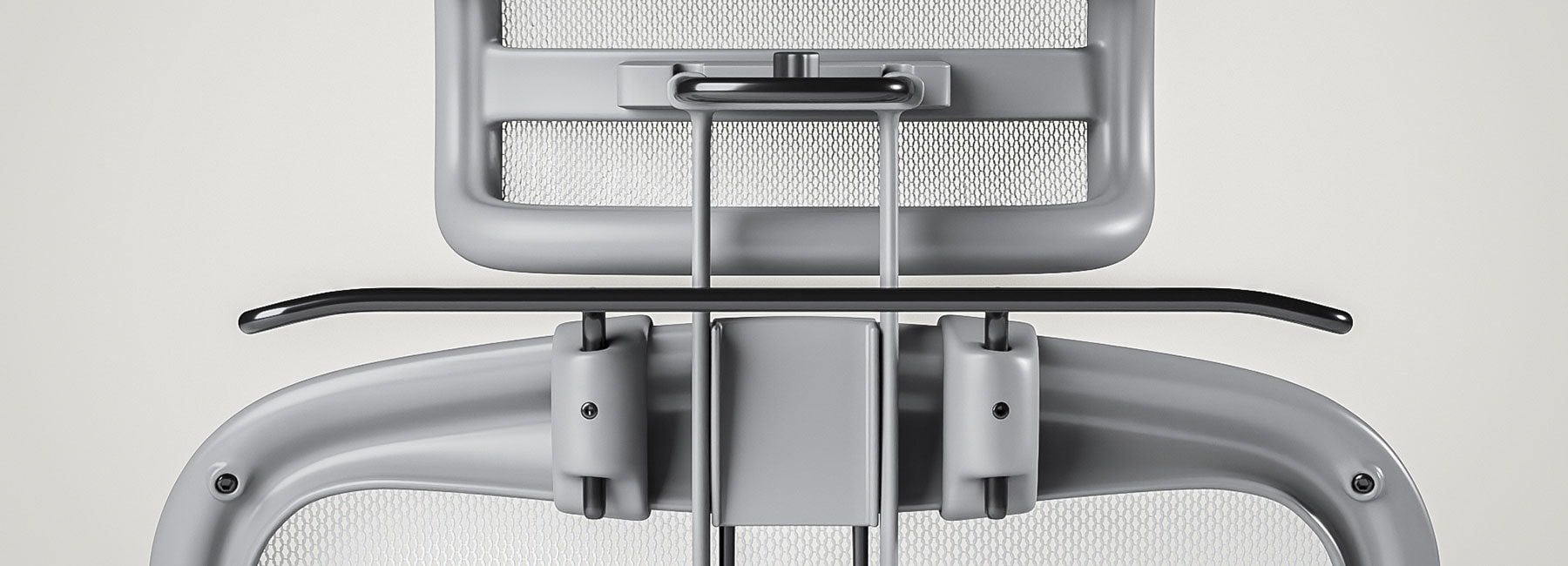
Objective:
We joined this project not from scratch, but within an existing product ecosystem. The client — an importer of premium office chairs — faced an unexpected limitation: the chair was available either with a headrest or with a coat hanger, but not both. In the mass market, this might be acceptable. In the premium segment, it is not.
Users expect completeness — comfort, functionality and aesthetic integrity at the same time. The objective was to design a hanger attachment that extends functionality while looking as if it was part of the original product.
Insight:
Working with an existing product requires a different kind of discipline. It is not about inventing something new, but about understanding what already exists.
The design must follow the logic of the brand — its forms, proportions and construction principles. The goal is not invisibility, but natural integration.
The result should feel inevitable, as if it was always meant to be there.


Solution #1:
The first concept follows the original logic of the chair. A clip attaches to the backrest frame, with the structure itself providing the final fixation. This approach aligns closely with the brand’s design language.
It feels coherent, balanced and visually unobtrusive — as if it was part of the original design. In this case, “invisible” becomes a quality.


Solution #2:
The second concept prioritizes mechanical stability. The clip engages with the lower edge of the backrest, preventing any sliding and providing a more secure fixation. Technically, this solution is more robust.
However, it introduces a slight visual tension. It remains functional and honest, but less aligned with the aesthetic language of the original product.
Result:
This project demonstrates that it is possible to extend the functionality of an existing product without compromising its design integrity. The key is not to design “on top” of the product, but within it — respecting the original intent and reinforcing it.
Sometimes, refinement is not about change. It is about continuing a design thought that was started by someone else.
Extending an existing product?
Let’s discuss your case.